World
Iran-US Gulf standoff turns violent, yet Brent keeps falling
Reported Iranian strikes, tanker incidents and a hardened US stance, while Brent sits near $89. What it means for UK fuel.
Prime Minister Andy Burnham heads to Brussels on 20 November seeking food, youth mobility and emissions trading deals. What is on the table and who disagrees.
Prime Minister Andy Burnham will attend a UK-EU summit in Brussels on Friday 20 November 2026 seeking new agreements on food and drink trade, a youth mobility scheme and emissions trading. On Monday 16 November, he said any EU deals must pass a test of whether they make life better in the UK, according to Alliance News.
The summit was fixed for 20 November in October after an earlier postponement that followed Sir Keir Starmer's resignation, according to ITV News and LBC. Mr Burnham has said the status quo with the EU is 'not good enough' and has argued that closer economic ties could add the equivalent of more than £10 billion a year to the economy by 2040. Critics, including Conservative leader Kemi Badenoch, say he is reopening the Brexit debate and is unlikely to secure a better deal.
This explainer sets out what is on the agenda, what the government says it would gain, what opponents argue, and why markets and businesses are paying attention. The negotiations are ongoing and details may change; what follows reflects published reports up to Monday 16 November.
The first priority is a food and agriculture agreement, often described as a sanitary and phytosanitary deal, which would reduce border checks on animal and plant products. A draft food and agriculture text was circulated among the 27 EU members, according to a PA report on 4 November. M&S Food managing director Alex Freudmann has said such a deal would bring fresher food and fuller shelves, noting that a shipment to Northern Ireland once needed one document and now needs more than 200.
The second is a link between the UK and EU emissions trading systems, which price carbon for heavy industry and power. Linking the schemes could help UK exporters avoid the EU's carbon border charge. The third is a youth mobility or experience scheme allowing younger people to live and work in the UK and EU for a limited period. The BBC has reported draft documents on both, according to PA. Mr Burnham has said he has not proposed freedom of movement returning.
Mr Burnham has also said he wants cooperation on Channel small boat crossings, and the agenda includes energy cooperation and wider security links, according to LBC.
The Treasury now estimates that agreements under negotiation could add up to 0.4% to GDP, up from 0.3% previously, Mr Burnham told the Economist, calling it 'a number that you cannot ignore'. In a Commons statement in October he said failing to seek deeper partnership would be a 'dereliction of duty' and that the public would be 'the boss' at every stage. He said cutting barriers to trade in British produce could ease price pressure in supermarkets.
Speaking in Antigua at the Commonwealth Heads of Government Meeting on 4 November, he said the public would expect the UK to take the growth opportunity 'with both hands'. On Monday he said, according to Alliance News, that the Conservatives' Brexit deal had 'burnt our bridges' with the EU and that any new deals must pass a test of making life better in the UK.
Ms Badenoch accused Mr Burnham of reopening the Brexit debate a decade after the referendum, saying EU negotiators are tough and that he had 'blurted out everything' he wants. Mr Burnham responded that he is not re-running the referendum and respects its result, and that those warning against 'psychodrama' misread the public mood. He fought the Makerfield by-election on a promise not to re-run Brexit.
There has also been controversy over comments about Russian interference. Mr Burnham was criticised after saying that Russia tried to influence the Brexit vote; he said he was not questioning the legitimacy of the 2016 referendum and told MPs that Russian actors sought to interfere in the 2019 general election, according to ITV News. These are political disputes in which the two sides disagree, and this article does not take a position.
The UK has raised concerns about the EU's 'Made in Europe' rules, which industry fears could lock out UK manufacturers from procurement and subsidy schemes. European Council president Antonio Costa has described the EU and UK as like-minded partners and said deeper cooperation is essential. Details of what the EU 27 will accept remain unclear in published reports, and none of the deals has been finalised.
Mr Burnham has told Cabinet ministers in a letter not to publicly back specific options for the long-term relationship, and said that after the summit the government would 'explore options', which would eventually be put to the public. That suggests Friday's meeting is a staging post rather than a final settlement.
For exporters, farmers and food retailers, reduced paperwork could cut costs. Sterling and UK shares are sensitive to any signal on trade, although on Monday the FTSE 100 was little changed, closing down 0.2% at 10,881.55, with MT Newswires reporting that markets had speculated on Mr Burnham seeking an agreement. The Bank of England has been raising rates to 4.00% and has said inflation could reach about 5% by mid-2027, so any measure that lowers food costs would be watched closely.
Economists caution that estimates of long-run gains depend on assumptions and take years to materialise. General information, not financial advice.
Watch for a joint statement after the summit, whether the food and emissions deals are signed or only agreed in principle, the reaction from EU capitals, and the domestic response in Parliament. Further negotiations on legal texts could continue for months. Readers should consult official government and EU publications for final terms.
Sources: ITV News, Burnham to use key UK-EU summit to seek new post-Brexit deals (12 October 2026); LBC, Burnham vows to strike fresh EU deals worth £10bn (12 October 2026); PA via AJ Bell, Public will expect me to grab EU deal with both hands (4 November 2026); Alliance News via AJ Bell, EU deals must pass test to make life better (16 November 2026); MT Newswires via Yahoo Finance UK (16 November 2026); Alliance News via The Independent and Yahoo Finance UK (16 November 2026).
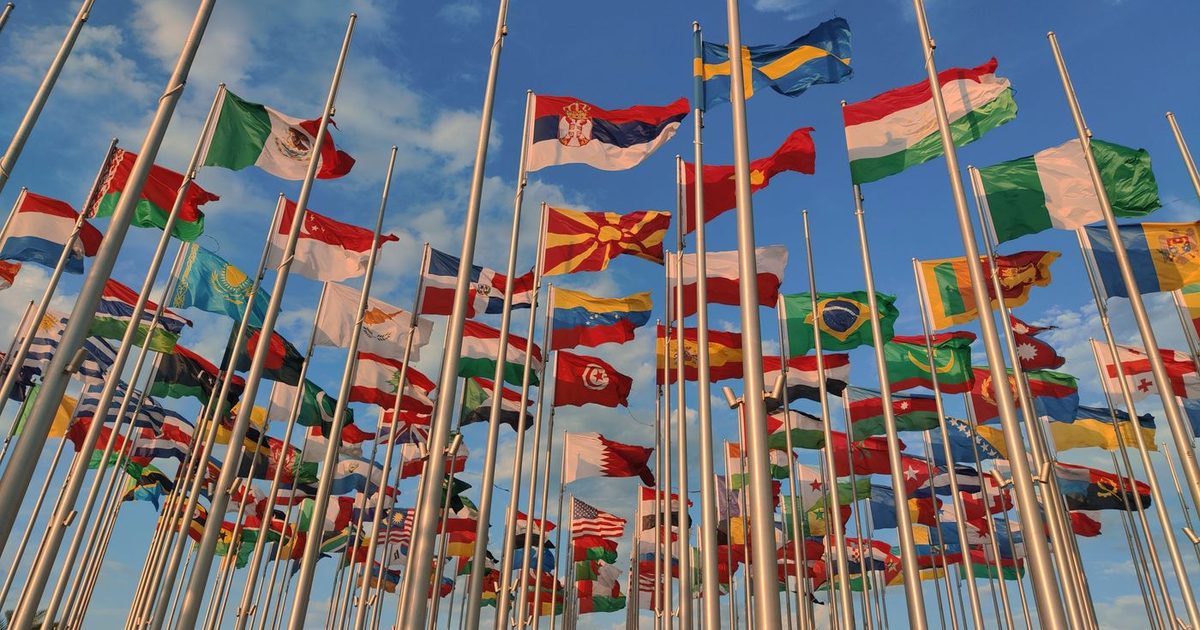
Photo: Pexels.
It takes place in Brussels on Friday 20 November 2026.
The government is seeking agreements on food and drink trade, emissions trading and a youth mobility or experience scheme.
The Treasury estimates up to 0.4% of GDP for agreements under negotiation, and Mr Burnham has cited more than £10 billion a year by 2040.
Mr Burnham has said he has not proposed it, and Labour's stated red lines for this Parliament include no return to free movement, the single market or the customs union.
Conservative leader Kemi Badenoch has accused Mr Burnham of reopening the Brexit debate and said he is unlikely to get a better deal.
No. Even if agreed on Friday, legal texts and implementation would normally take time.
Reported Iranian strikes, tanker incidents and a hardened US stance, while Brent sits near $89. What it means for UK fuel.
Ukraine says it sank a Russian corvette in Libya; a Russian ship burned off Finland. What is verified and the risks.
Andy Burnham signed food, carbon and youth scheme deals in Brussels, but a tuition fees dispute and six months of talks hold up implementation until 2028.
The COP31 climate talks in Antalya ended on 22 November with no agreed outcome after the EU and others rejected a draft that left out fossil fuels.
Top stories and analysis, straight to your email. No spam – unsubscribe any time.
By subscribing you agree to our Privacy Policy.