World
Ukraine drones hit Russian ships off Libya and Finland
Ukraine says it sank a Russian corvette in Libya; a Russian ship burned off Finland. What is verified and the risks.
Reported Iranian strikes, tanker incidents and a hardened US stance, while Brent sits near $89. What it means for UK fuel.
The standoff between the United States and Iran over the Strait of Hormuz turned violent again over the weekend of 21 and 22 November 2026, with reported Iranian missile and drone attacks on US bases in Bahrain, tanker incidents near Oman and a hardening of rhetoric from Washington. Yet oil prices have kept falling, with Brent crude trading near $89 a barrel on Tuesday, close to a three-month low.
The apparent contradiction reflects how the oil market has been reading supply rather than headlines. More crude is flowing through alternative pipelines, Libya's Sharara field has restarted, and stockpiles built up in October. At the same time, shipping through Hormuz remains well below normal, insurance costs are far higher than before the conflict, and the diplomatic track has stalled.
For the UK, the consequences run through fuel prices, inflation and interest rates. Transport inflation hit 7.5% in October, driven by diesel, and the Bank of England has already raised rates once this month. This report sets out what is verified, what is claimed by one side only, and what to watch. Several of the most dramatic claims, including mine strikes on tankers and Iranian attacks on US radar systems, come from Iranian-linked media and have not been independently confirmed.
On Saturday 21 November, Euronews and Al Jazeera reported that Iran launched two waves of drones and ballistic missiles at four US bases. Bahrain said it intercepted several of the attacks. Iran's Revolutionary Guards said the strikes were retaliation for a US attack on a radar site on Hengam Island and claimed to have destroyed two Patriot radars, which neither Bahrain nor the US confirmed. US Central Command denied an Iranian claim of having damaged an F-16, saying all US fighter jets in the region were safe and accounted for.
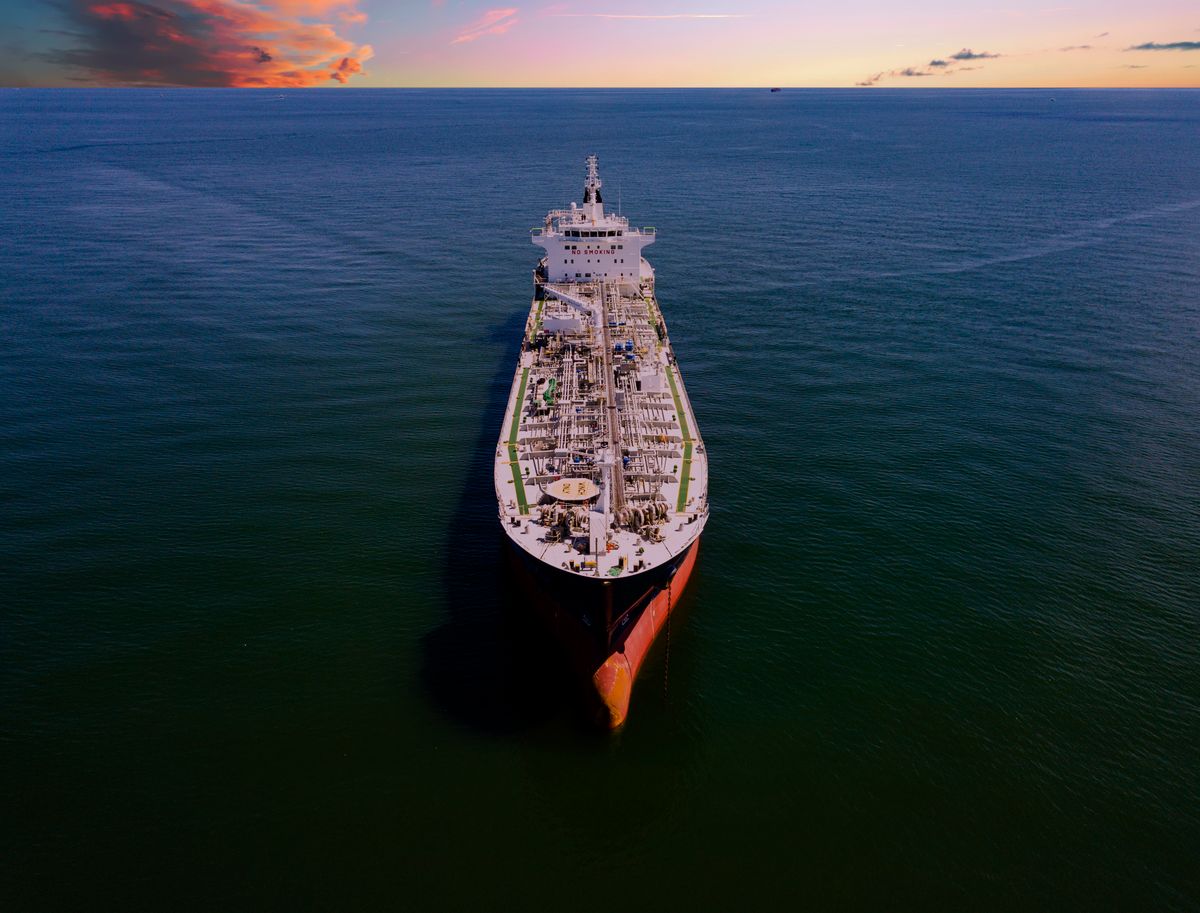
The same day, UKMTO reported two tankers hit by projectiles near Oman. Al Jazeera counted about 25 tanker incidents since 14 November. UKMTO data showed 263 ships transited Hormuz between 12 and 18 November, down 15% on the previous week, against about 135 a day before the conflict. A US maritime agency said war-risk insurance had risen from 0.10%-0.25% of a vessel's value to 3.5%-7.5%.
On Sunday, President Donald Trump told Fox News that if Iran tried to run the US blockade with a tanker convoy, the vessels would end up at the bottom of the sea. He said he wanted a permanent deal and had never sought regime change. Euronews also reported that he called an earlier memorandum null and void, though that rests on one outlet and Al Jazeera's coverage describes the memorandum differently, so it should be treated with caution. AP reported that senior US officials JD Vance and Marco Rubio met Qatar's prime minister on Monday, with no new policy announced.
Iran's foreign ministry spokesman, Esmaeil Baghaei, said Tehran would use every means to counter US aggression and called the blockade a violation of the UN Charter. Foreign Minister Abbas Araghchi said Hormuz could reopen within two hours if the US met its commitments, listing the lifting of sanctions, an end to the blockade and implementation of the memorandum. His deputy, Kazem Gharibabadi, called the blockade an act of war. Qatar's prime minister told Al Jazeera the region could not withstand another escalation.
Iranian outlets claimed 14 tankers were ready at Kharg Island to test the blockade. Sanctions expert Charlie Brown of United Against Nuclear Iran called that farcical and said satellite imagery showed no significant loading, while the Institute for the Study of War said Iran could try to break the blockade within days.
Reuters reported on 24 November that Brent was about $88.97 and US crude about $79.94, with Brent at its lowest close since 31 August. Several factors were cited: Saudi Aramco said flows on its East-West pipeline had risen from 2 million to 7 million barrels a day, Libya's Sharara pipeline had restarted, Deutsche Bank reported global stocks up 52 million barrels in October, and the equity sell-off weighed on prices on 23 November. ANZ's Daniel Hynes said the market remains under severe strain despite some improvement in inventories. The International Energy Agency has estimated cumulative losses of 2.8 billion barrels of oil and 60 billion cubic metres of gas since the war began.
OPEC+ meets on 29 November. The Wall Street Journal reported that US authorities are investigating whether Iran was behind cyberattacks on up to 50 tankers, which Reuters relayed but has not independently verified.
The Office for National Statistics reported on 18 November that UK inflation rose to 3.6% in October, with transport inflation at 7.5% driven by diesel. RAC Fuel Watch figures cited by PetrolPrices put petrol at 168.45p and diesel at 197.27p on 10 November, against peaks of 174.94p and 200.20p on 5 October. PetrolPrices' live prices on 24 November showed petrol at about 159.7p and diesel at 191.6p. The AA's Luke Bosdet had forecast a further cut of around 10p on petrol if wholesale prices held, while PetrolPrices warned crude could return above $100 if talks stall.
That matters for the Bank of England, which raised Bank Rate to 4% on 5 November and meets again on 17 December. Cheaper fuel would ease pressure on inflation, but a renewed spike in oil would do the opposite. Households with variable energy tariffs, businesses with heavy transport costs and savers watching mortgage rates all have a stake in how this standoff resolves.
Watch for any attempt to run the blockade, further attacks on shipping or US bases, independent confirmation of the reported mine incidents, and the OPEC+ meeting on 29 November. Diplomatic channels through Qatar remain open, but neither side has signalled a concession. Readers should treat claims from either side's military and state media with caution until verified.
Sources: Euronews (21 and 23 November 2026); Al Jazeera (22 and 24 November 2026); Fox News (22 November 2026); Maritime Executive (20 November 2026); AP via KIRO7 (23 November 2026); Reuters via Business Recorder (24 November 2026); Gulf News (24 November 2026); PetrolPrices (11 November 2026, live prices 24 November). Details are developing.
Photo: Pexels.
Bahrain said it intercepted several Iranian drone and missile attacks on 21 November, with a fire at a civilian industrial site and no injuries reported.
Reports cite higher pipeline flows from Saudi Arabia, the restart of a Libyan pipeline, rising inventories and weaker equity markets.
No. They were claimed by Iran's Revolutionary Guards and have not been independently verified.
Pump prices have fallen from early-October peaks, but analysts warn they could rise if crude returns above $100.
The group is due to meet on 29 November 2026.
Ukraine says it sank a Russian corvette in Libya; a Russian ship burned off Finland. What is verified and the risks.
Andy Burnham signed food, carbon and youth scheme deals in Brussels, but a tuition fees dispute and six months of talks hold up implementation until 2028.
The COP31 climate talks in Antalya ended on 22 November with no agreed outcome after the EU and others rejected a draft that left out fossil fuels.
The Saudi-Houthi war widened on 19-21 November with missiles on Riyadh and port threats. What it means for oil, UK fuel prices and inflation.
Top stories and analysis, straight to your email. No spam – unsubscribe any time.
By subscribing you agree to our Privacy Policy.