World
Iran-US Gulf standoff turns violent, yet Brent keeps falling
Reported Iranian strikes, tanker incidents and a hardened US stance, while Brent sits near $89. What it means for UK fuel.
The first trilateral summit of the US, China and Russia is under way in Shenzhen. What is on the agenda and what it means for the UK.
The leaders of the United States, China and Russia are due to meet in Shenzhen today, 19 November 2026, in what China's foreign ministry has called the first face-to-face "China-Russia-US Summit". The meeting takes place on the sidelines of the 33rd Asia-Pacific Economic Cooperation (APEC) leaders' meeting, which China is hosting on 18 and 19 November with 21 member economies.
The White House schedule, as reported by Outlook India, lists the trilateral for 2:30 pm local time at Kylin Villa in Shenzhen. At the time of writing no outcome had been reported, so this article sets out what was announced beforehand and what to look for. Details may change.
The US announced the meeting on 13 November, the Kremlin confirmed it the next day, and China confirmed it on 16 November. The White House said no separate Trump-Putin bilateral is scheduled. President Donald Trump arrived on 18 November, and was greeted at the airport by President Xi Jinping, an honour reported as a first for Mr Xi towards any visiting leader.
The meeting is closely watched because it brings together the three largest nuclear powers at a time of war involving Iran, stalled Ukraine talks and no binding limits on US and Russian strategic arsenals.
White House spokeswoman Olivia Wales said Mr Trump wants to discuss reducing global nuclear arsenals and considers proliferation dangerous. New START, the last treaty limiting US and Russian strategic nuclear weapons, expired on 5 February 2026. UN Secretary-General Antonio Guterres called the expiry a "grave moment" and said on 16 November that the United Nations would support any denuclearisation initiative from the summit, while stressing that such an outcome is not guaranteed.
China has been reluctant to join trilateral limits. Beijing argues that US and Russian arsenals are far larger than its own and that Washington and Moscow bear primary responsibility for disarmament. The South China Morning Post, cited by Business Today, reported that leaders could explore commitments on artificial intelligence in nuclear arsenals.
A senior US official said Mr Trump intends to discuss the war with Iran with Mr Xi and Mr Putin. China is Iran's largest trading partner and a major buyer of Iranian crude, which gives it a role in any settlement. Brent crude was around $92 a barrel on 18 November, about 30% above its pre-war level, with the Strait of Hormuz disrupted.
On Ukraine, US officials say talks are on a separate track that does not include China. Mr Putin has sought to discuss the war, while Beijing has said European countries must be involved. Business Today reports that Mr Xi and Mr Trump will also manage differences over trade, AI and Taiwan, and China's spokesperson said Beijing hopes for practical results on trade, connectivity, the digital economy and AI.
The US also tightened AI chip export controls on 16 November to stop Chinese firms accessing American hardware via overseas data centres, a move that sits awkwardly alongside talk of cooperation.
Mr Trump said on arrival that the meeting was already a "win", called Mr Xi "one of the great presidents of China" and said it was a big win for both countries, according to StratNews Global. In APEC remarks, Mr Xi criticised Western trade protectionism and sanctions and called for "free and open" trade, and Mr Putin also denounced protectionism and sanctions and described Russia as part of the region's food and energy security. China's foreign ministry said the leaders would discuss "safeguarding world peace" and "promoting strategic stability", and called the meeting one of "groundbreaking significance".
Supporters of engagement argue that a first trilateral is valuable in itself, because it opens a channel at a time of crisis. Critics point out that Russia and China have criticised US policy for years and that the three governments disagree on Ukraine, Iran, trade and Taiwan.
The UK has no seat at the table, but it is exposed to the outcomes. Energy prices matter most: the Bank of England has blamed the Middle East conflict for higher fuel costs, and UK inflation rose to 3.6% in October. Any move towards reopening Hormuz would be likely to ease oil, and any failure would not. A breakdown in arms control would also raise defence spending pressures for European governments. Markets were also focused on rate expectations, with gold falling below $3,800 on 18 November on Fed hike bets, and oil, currencies and defence shares are the most direct places for summit news to show up.
Watch for any joint or separate statements after the meeting, any announcement of formal arms-control talks, and any change in tone on Iran. Because the meeting had not concluded when this was written, facts about what was agreed should be checked against official statements.
Sources: Outlook India (16 November 2026); Business Today, citing PTI (14 November 2026); Times of Oman, citing ANI (16 November 2026); StratNews Global (19 November 2026); TechCrunch (16 November 2026); CPA, UK Business News Today (18 November 2026).
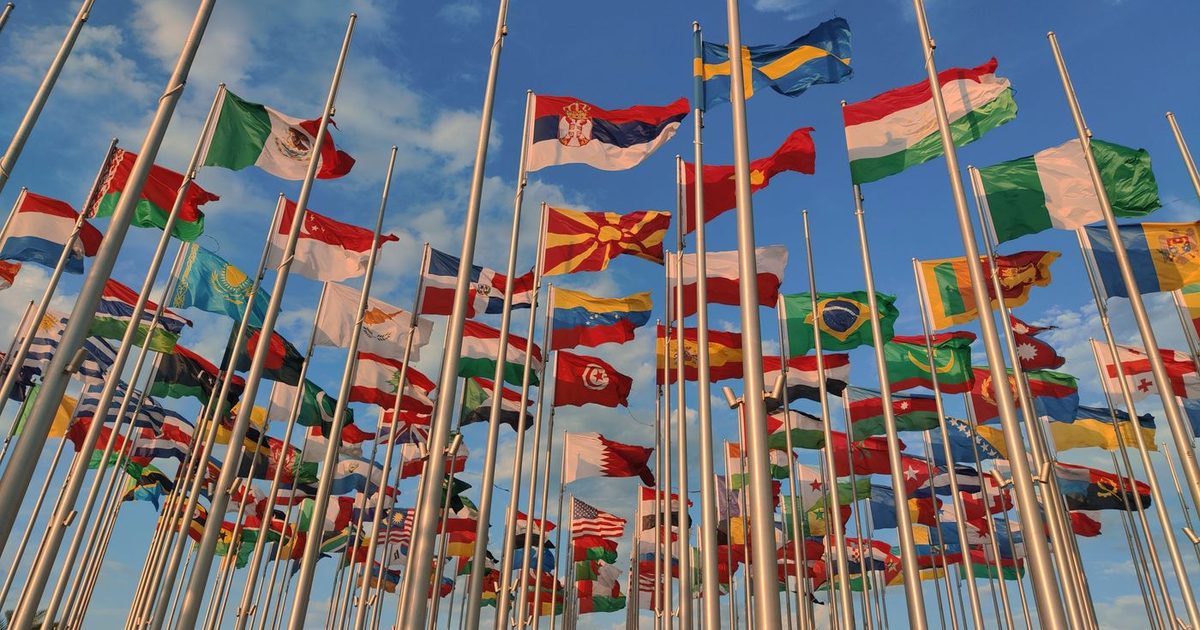
Photo: Pexels.
In Shenzhen, China, on 19 November 2026 at about 2:30 pm local time, on the sidelines of APEC.
US President Donald Trump, China's President Xi Jinping and Russia's President Vladimir Putin.
It was the last treaty limiting US and Russian strategic nuclear weapons. It expired on 5 February 2026.
US officials say it is unlikely to be on the trilateral agenda, though Mr Putin has sought to raise it.
Outcomes on Iran and oil affect UK fuel costs and inflation, and arms control affects European security spending.
Reported Iranian strikes, tanker incidents and a hardened US stance, while Brent sits near $89. What it means for UK fuel.
Ukraine says it sank a Russian corvette in Libya; a Russian ship burned off Finland. What is verified and the risks.
Andy Burnham signed food, carbon and youth scheme deals in Brussels, but a tuition fees dispute and six months of talks hold up implementation until 2028.
The COP31 climate talks in Antalya ended on 22 November with no agreed outcome after the EU and others rejected a draft that left out fossil fuels.
Top stories and analysis, straight to your email. No spam – unsubscribe any time.
By subscribing you agree to our Privacy Policy.