Markets
FTSE 100 rebounds 1.3% as Nvidia return lifts tech: week ahead
FTSE 100 closed up 1.3% at 10,480.82 on 23 November as tech shares rebounded. What moved, and what to watch this week.
The AI-led rout that gave London its worst week of the year spilled into Asia on Monday 23 November, with South Korea hit hardest and the FTSE 100 called lower.
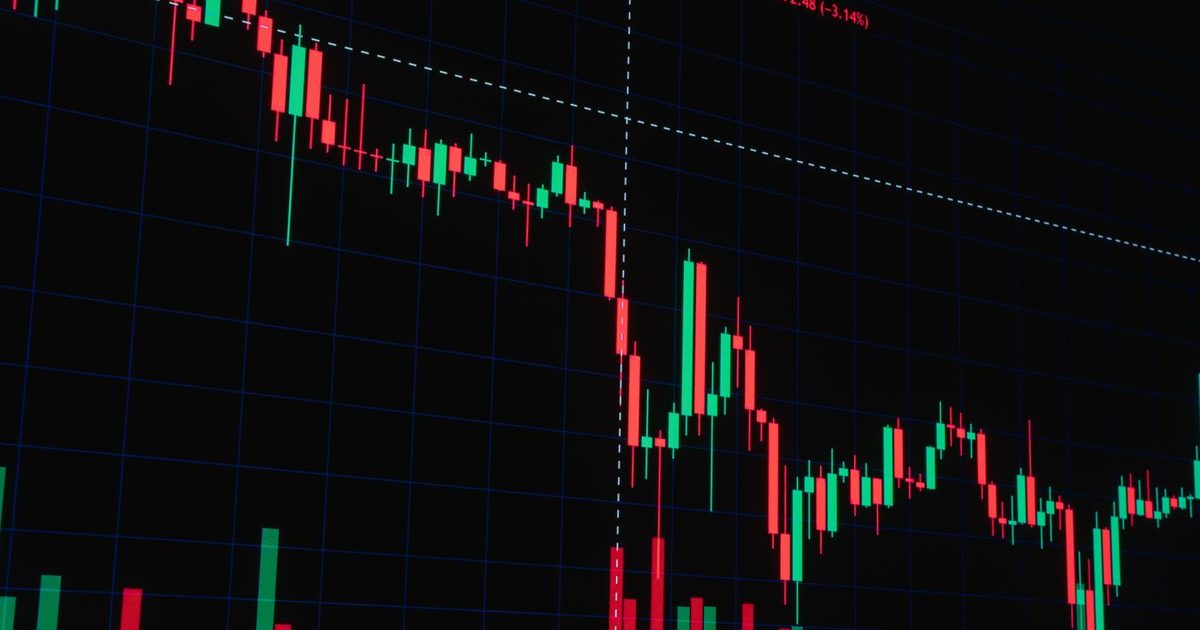
The global sell-off in artificial intelligence and technology shares rolled into a new week on Monday 23 November 2026, with South Korea's Kospi index swinging violently and London indicated to open modestly lower. The moves follow a Friday in which the Nasdaq Composite lost more than 5% in a single session and the FTSE 100 ended its worst week for months.
In Asia, the Kospi fell by as much as 5.8% before recovering to a loss of about 3.2% by 04:30 GMT, according to Al Jazeera's market report. Hong Kong's Hang Seng and China's CSI 300 were each down about 0.6%, while Japan's markets were closed for a holiday. Spread-betting indications pointed to a FTSE 100 open about 0.3% lower, according to a pre-market note on UK stocks published on 23 November.
The picture is not uniformly negative. US stock futures, which trade while Wall Street is shut, pointed to a bounce of roughly 2% for the S&P 500 and close to 3% for the Nasdaq 100, as reported by Reuters on the Sunday evening in New York. Analysts quoted in market reports described conditions as heavily oversold, though others said there was no obvious catalyst yet to turn panic into a lasting recovery.
We have not found a verified London closing report for Monday as this article was prepared, so the figures below for Monday are early-session indications and the closing levels for Friday 20 November. Readers should check live prices before making any decisions.
The FTSE 100 fell 106.34 points, or about 1.0%, to 10,346.34 on Friday 20 November, its sixth straight daily decline, after closing at 10,452.68 on Thursday. For the week it lost 5.1%. The mid-cap FTSE 250 fared worse, down 2.2% on the day to 23,651.73 and 4.7% on the week, while the AIM All-Share lost 2.4% on the day and 6.7% on the week.
The biggest FTSE fallers were technology-exposed names. Polar Capital Technology Trust dropped about 8.3%, Halma 6.8%, Computacenter 5.1% and Scottish Mortgage Investment Trust 4.9%. Defensive shares such as Unilever and British American Tobacco rose, which limited damage to the headline index.
Across Europe, the CAC 40 fell about 1.9% on Friday and the DAX about 1.6% according to different market reports. In weekly terms, Frankfurt lost 7.1%, Madrid 5.7%, Paris 5.3% and London 5.1%, according to figures cited by Italian business daily Il Sole 24 Ore.
On Wall Street the damage was larger. The Nasdaq Composite lost 5.28% on Friday and roughly 10% over the week, which Reuters described as its biggest weekly fall since March 2020. The S&P 500 entered correction territory, meaning it is more than 10% below its record high. Some outlets give marginally different closing percentages, which is common when reports are written at different times, so we use the Reuters-based closing figures.
The immediate driver is doubt about whether enormous and partly debt-funded spending on AI will earn a return. Morgan Stanley has forecast spending by the largest cloud companies above $1.6 trillion next year, and Gartner puts total AI investment at about $2.7 trillion in 2026 and $3.6 trillion in 2027, figures reported by Al Jazeera. When valuations assume those investments pay off, even small disappointments can trigger large sell-offs.
Several specific events fed the mood. Anthropic's record initial public offering, which raised about $81 billion, saw its shares slide on their second day of trading. Nvidia's shares fell sharply after its results despite strong revenue, and reports have pointed to US restrictions on Chinese access to computing capacity. Interest rates are also a factor: investors expect a US Federal Reserve rate rise next month, which lowers the present value of high-growth companies.
Policy responses in Asia show how seriously regulators are taking the volatility. According to Reuters, South Korea's finance minister said he would act to stabilise the market if needed, Taiwan tightened short-selling rules, and Chinese exchanges eased margin requirements.
Brent crude settled at $92.57 on Friday, up 0.64% on the day but sharply lower over November on hopes of de-escalation in the Gulf. It had been $96.59 on 13 November. Gold has been unusually weak for a so-called safe haven, trading around $3,540 to $3,557 an ounce and heading for its worst week in eight months, compared with about $3,858 on 16 November.
Sterling traded around $1.31 on Friday. The UK 10-year gilt yield stood at 5.24%, down 0.08 percentage points on the day, according to Trading Economics. Money markets are pricing at least three more Bank of England rate rises by the end of 2027, though some banks such as UBS expect only one, in February.
For UK investors, the combination of falling shares, a stable pound and high gilt yields matters for pensions, trusts and mortgage costs alike. Falling equity prices reduce the value of workplace pension funds that hold global shares, while high gilt yields keep fixed-rate mortgage pricing elevated.
Reaction has been mixed. Rajat Agarwal of Societe Generale said Friday's US technology fall was a move of more than three standard deviations, an extremely unusual event. Binky Chadha of Deutsche Bank was quoted calling the market heavily oversold. Damien Boey said there was no catalyst yet for panic to turn into a durable bounce.
Russ Mould of AJ Bell said technology investors are jittery at the slightest bad news. Emmanuel Cau of Barclays suggested the AI hype may have peaked even if the investment race has not. Khoon Goh of ANZ said AI concerns would drive markets this week.
These are individual views, not forecasts we endorse, and they differ on whether this is a sharp correction or the start of something longer.
Monday brings flash purchasing managers' index surveys for the UK, eurozone and US. On Tuesday, Dell reports and several London-listed companies including Compass Group and Kingfisher update investors. Wednesday brings US PCE inflation and a second estimate of US third-quarter GDP. US markets are shut on Thursday for Thanksgiving and close early on Friday, so trading volumes may be thinner and moves exaggerated.
The Bank of England's next policy decision is on 17 December, and the US Federal Reserve meets on 8 and 9 December. Both will be shaped by how inflation, energy prices and markets behave in the coming weeks.
Sources: Al Jazeera (23 November 2026); Reuters via Yahoo Finance (22-23 November 2026); LBC (20 November 2026); Share Talk (20 November 2026); Il Sole 24 Ore (20 November 2026); Kotak Neo (23 November 2026); rallies.ai UK factors to watch (23 November 2026); Trading Economics (20 November 2026); Dow Jones via MarketScreener (22 November 2026). General information, not financial advice.
Photo: Pexels.
South Korea's market is heavily weighted towards chip and technology companies, so it reacted strongly to the global AI sell-off. It fell by as much as 5.8% before recovering part of the loss.
The index closed Friday 20 November at 10,346.34, down 5.1% on the week and down for six straight sessions.
Yes, according to Reuters-based reports it has fallen more than 10% from its record high, which is the usual definition of a correction.
Markets price further rises by the end of 2027 but some forecasters expect fewer. The next decision is on 17 December.
This article does not give personal advice. Anyone worried about their holdings should consider their own circumstances or speak to a regulated adviser.
FTSE 100 closed up 1.3% at 10,480.82 on 23 November as tech shares rebounded. What moved, and what to watch this week.
The FTSE 100 fell 5.1% in a week of tech-led selling while sterling held near $1.31 and UK retail sales surprised. What moved markets on Friday 20 November.
London shares fell 0.9% on 19 November as a global tech sell-off and Fed rate bets hit markets; Asia slid further early on Friday.
Gold fell under $3,800 an ounce on 18 November, its lowest in over a year, as Fed rate-hike bets and a strong dollar weighed.
Top stories and analysis, straight to your email. No spam – unsubscribe any time.
By subscribing you agree to our Privacy Policy.