Markets
FTSE 100 rebounds 1.3% as Nvidia return lifts tech: week ahead
FTSE 100 closed up 1.3% at 10,480.82 on 23 November as tech shares rebounded. What moved, and what to watch this week.
Gold fell under $3,800 an ounce on 18 November, its lowest in over a year, as Fed rate-hike bets and a strong dollar weighed.
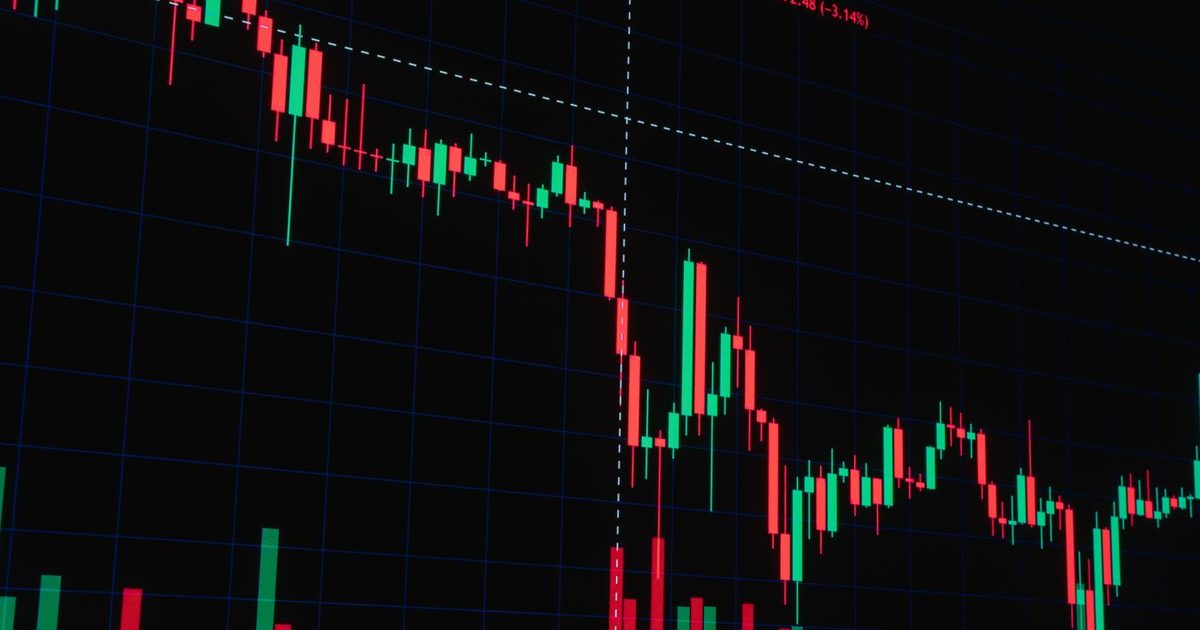
Gold dropped below $3,800 an ounce on 18 November 2026, its lowest level in more than a year, as investors bet that the US Federal Reserve will raise interest rates again next month and the dollar strengthened. The metal is now more than 30% below the record of $5,594.82 an ounce it set in January 2026.
The slide has been steady rather than sudden. Spot gold fell 3.0% to $3,867.96 on 12 November, its third straight daily loss, and touched $3,830.74 on 16 November, its weakest since early October 2025, according to Reuters reporting carried by regional news sites. Market summaries on 18 November put it at roughly $3,780, down about 1.8% on the day.
The move matters for UK savers and investors because gold has long been treated as a store of value when inflation rises or politics turns unstable. This year it has done the opposite: with the war involving Iran pushing up oil prices and inflation, central banks have kept rates high or raised them, and that has made a metal that pays no interest less attractive.
This article sets out what has driven the fall, what analysts are saying, and which dates could move the price next. It is general information, not financial advice.
The first driver is interest rates. The Fed held its policy rate at 3.75% to 4.00% at its 27-28 October meeting, but the vote was 10-2, with two members wanting a further increase after September's quarter-point rise. Strong US retail and spending data since then, and comments from Fed officials favouring tighter policy, have convinced traders that another increase is coming. One report on 12 November put the market-implied chance of a 25-basis-point rise in December at 91%.
The second is the dollar. Because gold is priced in dollars, a stronger currency makes it more expensive for buyers elsewhere. The dollar index was around 103.8 on 18 November, supported by those rate expectations, and one report described it as close to its strongest since April 2025.
The third is forced selling. Nvidia's market value is reported to have fallen by about $1.9 trillion between early October and 13 November, to $3.9 trillion. Analysts quoted by Reuters said some investors sold gold to raise cash and meet margin calls on losses elsewhere. Nicky Shiels of MKS PAMP described gold as, in the short term, a liquidity asset investors sell when they need cash. Nvidia's strong results on 17 November lifted US futures, but the Dow still fell 1.64% to 50,759 and the S&P 500 fell 1.03% on that day, according to a business news summary.
Gold would normally benefit from conflict, yet the war involving Iran has had the reverse effect because it feeds inflation. Higher oil lifts inflation expectations, which pushes central banks towards tightening. Commentary from Commerzbank cited by investingLive says gold has tended to fall when tensions escalate and recover when they ease, and that it is likely to stay under pressure until the Strait of Hormuz reopens.
Brent crude was about $92 a barrel on 18 November, down around 1% on the day but still well above pre-war levels. Reports of renewed US-Iran military exchanges kept the dollar bid as a safe haven, according to a foreign exchange summary published that day.
Not everyone is bearish. The World Gold Council estimates central banks bought about 675 tonnes in the first nine months of 2026, including undisclosed purchases, and physically backed gold funds saw inflows of 211 tonnes in the third quarter, according to the figures reported. Commerzbank, as reported, expects a recovery as margin-related selling fades, although it cut its end-2026 forecast to $4,800 from $5,000 in June.
Other analysts are more cautious. FXCM's Nikos Tzabouras said expectations of higher rates support the dollar and add to gold's difficulties, and IC Markets described the near-term technical picture as strongly bearish after the break below $3,800. A level once seen as psychologically important has therefore become a test of whether buyers return.
Gold is quoted in dollars, so the sterling price also depends on the pound. Sterling was around $1.3155 on 18 November, after UK inflation of 3.6% in October came in slightly below the Bank of England's forecast and the pound slipped. A weaker pound softens a fall in dollar gold for UK holders, although it does not remove it.
Anyone holding gold through exchange-traded funds, mining shares or coins should remember that each carries different risks and costs, and that gold pays no income. Diversification still has a role, but a one-year low is a reminder that gold can fall sharply when rates and the dollar rise together.
The next big date is the Fed's 8-9 December meeting. The European Central Bank meets on 16-17 December and the Bank of England on 17 December. Before then, US jobless claims, Fed speeches and any progress on reopening the Strait of Hormuz could shift expectations. Developing details, including exact price levels, change by the hour in these conditions.
Sources: investingLive (Commerzbank commentary on gold, early November 2026); Khaleej Times (12 November 2026); Nation Thailand, citing Reuters (17 November 2026); Finimize (16 November 2026); CPA, UK Business News Today (18 November 2026); IC Markets, Europe Fundamental Forecast (19 November 2026); FinanceFeeds, Global FX Market Summary (18 November 2026). General information, not financial advice.
Photo: Pexels.
It dropped below $3,800 an ounce on 18 November 2026, the weakest in more than a year and more than 30% below January's record of $5,594.82.
Higher inflation has made central banks more likely to raise rates, which lifts the dollar and bond yields. Gold pays no interest, so it looks less attractive when yields rise.
The Federal Reserve's next meeting is on 8-9 December 2026, and markets expect a quarter-point rate rise.
Not necessarily. The sterling price depends on both the dollar gold price and the pound-dollar exchange rate, so a weaker pound can offset part of a fall.
Nobody can say. Some analysts expect forced selling to reverse, while others see pressure continuing while rates and the dollar stay high.
FTSE 100 closed up 1.3% at 10,480.82 on 23 November as tech shares rebounded. What moved, and what to watch this week.
The AI-led rout that gave London its worst week of the year spilled into Asia on Monday 23 November, with South Korea hit hardest and the FTSE 100 called lower.
The FTSE 100 fell 5.1% in a week of tech-led selling while sterling held near $1.31 and UK retail sales surprised. What moved markets on Friday 20 November.
London shares fell 0.9% on 19 November as a global tech sell-off and Fed rate bets hit markets; Asia slid further early on Friday.
Top stories and analysis, straight to your email. No spam – unsubscribe any time.
By subscribing you agree to our Privacy Policy.