Markets
Kospi plunges and FTSE 100 tipped lower as AI sell-off rolls on
The AI-led rout that gave London its worst week of the year spilled into Asia on Monday 23 November, with South Korea hit hardest and the FTSE 100 called lower.
FTSE 100 closed up 1.3% at 10,480.82 on 23 November as tech shares rebounded. What moved, and what to watch this week.
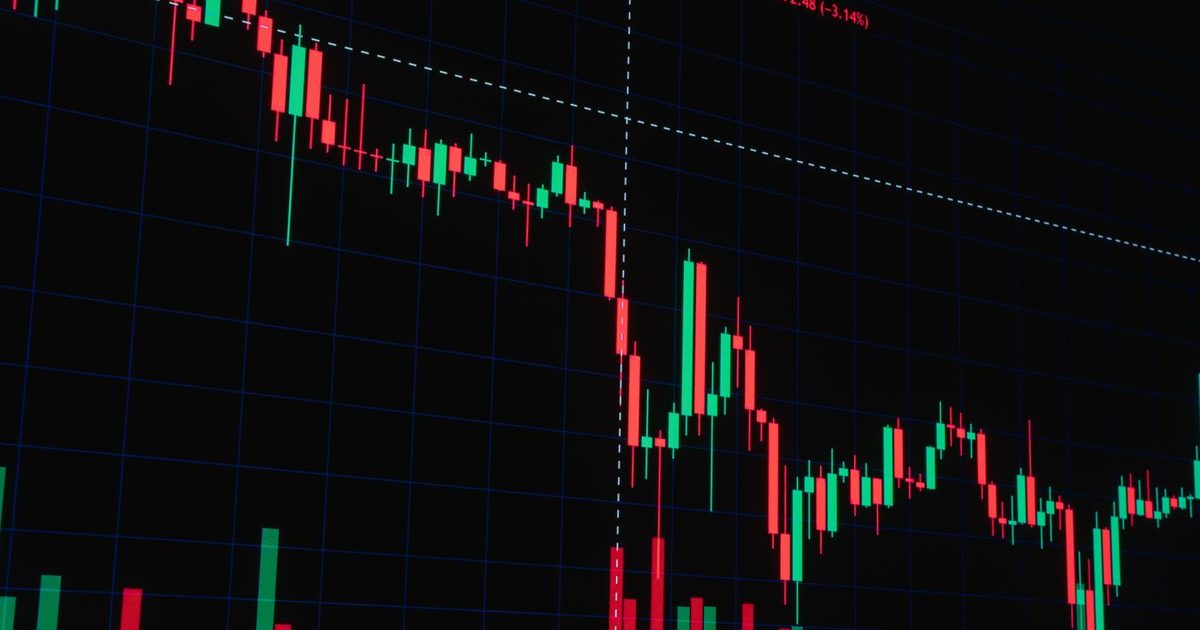
The FTSE 100 ended Monday 23 November 2026 at 10,480.82, up 134.48 points or 1.3%, as a violent rebound in technology shares spread from Wall Street to London. The relief followed Nvidia's decision to reinstate Jensen Huang as chief executive less than two weeks after he left, and it came after a punishing week in which the UK blue-chip index lost about 5.1%.
The rally was broad but not uniform. Technology-linked investment trusts and software and electronics names led the London gains, while a handful of companies were hit by downgrades and warnings. Sterling slipped against the dollar, oil fell, and gold bounced back, a mix that shows investors were still weighing growth, inflation and interest-rate risks rather than simply buying everything.
This report covers the Monday close and the week ahead. At the time of writing, a verified closing level for Tuesday 24 November was not yet available from the sources checked, so no claim is made about how the session ended. A pre-market note on Tuesday suggested the index was expected to open about 0.2% higher.
The week is a busy one for UK earnings, with Compass Group, Kingfisher and several mid-caps reporting, and US inflation data due before the American Thanksgiving holiday. Here is what moved, why it moved and what to watch.
London opened the week nervously after Asian markets were hit by the technology sell-off. South Korea's Kospi swung sharply, falling by as much as 5.8% before closing 3.3% lower, according to Al Jazeera. In the UK, early indications pointed to a lower open, with the FTSE 100 coming off five straight daily losses.
The mood changed as news emerged that Nvidia's board had unanimously reinstated Mr Huang as president, chief executive and director with immediate effect. Nvidia said in its filing that the board had taken input from senior US government officials and concluded his return posed no national security risk. It also said an independent committee would continue examining reports that he had been the target of a foreign intelligence effort, and that a new national security and export control committee would be created.
Wall Street responded with one of its sharpest one-day rebounds in years. According to Fox Business and the Motley Fool, the Dow Jones Industrial Average rose about 3.0% to 49,595.31, the S&P 500 gained roughly 4.7%, ending a seven-day losing streak, and the Nasdaq Composite climbed about 6.5%. Micron rose 19% and CoreWeave 22%, according to the same reports.
In Europe, Brit Brief reported that the CAC 40 rose 1.5% and the DAX 2.2%. London's gains were smaller, partly because the FTSE 100 has fewer pure technology companies than the US indices.
Among the FTSE 100's best performers, Alliance News reported that Polar Capital Technology Trust rose 8.4% to 558p, Halma gained 4.8%, Scottish Mortgage added 4.6% and Computacenter climbed 4.3%. Drax rose 5.2% in the FTSE 250 after guiding to 2026 earnings well ahead of analyst expectations, and Raspberry Pi gained 8.0%.
The losers were company-specific. Vodafone fell 5.1% to 102.85p after Citigroup cut its rating from neutral to sell, with a reported target of 100p. BT slipped 2.1% to 207.90p, and RELX lost 43p to 2,933p. Further down the market, Capita fell 74% after its chief executive left and it issued a profit warning, and Crest Nicholson dropped 30% after warning on trading. Vistry fell 7.0% in sympathy with the housebuilding sector.
Sterling ended at $1.3020, down from $1.3098 the previous evening, and at €1.1948 against the euro, slightly up from €1.1928. Alliance News noted that Friday's low of $1.3076 had been the pound's weakest level against the dollar in about a year, so Monday's move extended that softness.
Brent crude fell to $88.84 a barrel from $91.88, partly reflecting the equity sell-off and signs of increased supply. Gold rebounded to $3,669.27 an ounce from $3,545.53. Goldman Sachs was reported as saying gold often sells off at the start of equity crashes because investors raise cash, which helps explain why the metal had fallen before bouncing.
Analysts were cautious. Stephen Innes of SPI Asset Management said, in comments carried by Alliance News, that the real test is not how high markets bounce but how much selling they can absorb before gravity takes over again, and he questioned whether the move might be a short-lived "dead cat bounce". Morningstar's Lindsey Stewart said the reinstatement was almost as big a shock as the departure, and that questions over Nvidia's governance remained.
The underlying worries have not gone away. Investors are debating whether artificial-intelligence spending, which Gartner expects to reach $2.7 trillion globally this year according to Al Jazeera's background reporting, can keep rising, and whether higher interest rates will squeeze valuations. Fox Business reported that futures markets priced about a 96% chance of a US rate rise in December. In the UK, the Bank of England raised Bank Rate to 4% on 5 November, and its next decision is on 17 December.
According to Hargreaves Lansdown's weekly calendar, Tuesday 24 November brings full-year results from Compass Group, a trading update from Kingfisher, and updates from Cranswick, AO World, LondonMetric, Telecom Plus, Auction Technology Group, Coats and Molten Ventures. Compass is in focus after the Financial Times reported it plans to move its main listing to New York.
On Wednesday 25 November, Pets at Home and RHI Magnesita report, and the second US estimate of third-quarter GDP and the PCE inflation gauge are due, according to a Dow Jones week-ahead note. US markets are shut on Thursday for Thanksgiving. Mitchells & Butlers, Halfords, CMC Markets and Safestore report on Thursday, and the Bank of Korea is expected to raise rates to 3.25%.
For UK savers with pensions, ISAs or funds, the past fortnight is a reminder of how much global indices now depend on a few very large technology companies. Many UK-listed investment trusts and global trackers hold Nvidia and its suppliers, so swings of this size show up in everyday portfolios even when the holder never bought the shares directly.
Volatility of this scale is normal in sharp corrections, but it is also a reason to check how concentrated a portfolio is. Nothing in Monday's rebound removes the risks that caused Friday's fall, and the next set of US inflation figures could move prices again.
Sources: Share Talk/Alliance News (23 November 2026); Brit Brief (23 November 2026); MarketScreener/Alliance News (23 November 2026); Al Jazeera (23 November 2026); Fox Business (23 November 2026); Motley Fool (23 November 2026); Nvidia filing via SEC (23 November 2026); Hargreaves Lansdown (23 November 2026); rallies.ai (24 November 2026). General information, not financial advice.
Photo: Pexels.
It closed at 10,480.82, up 134.48 points or 1.3%, after ending the previous Friday at 10,346.34.
Nvidia reinstated Jensen Huang as chief executive, triggering a sharp rally in technology shares that spread to Europe after a week of heavy losses.
Vodafone fell 5.1% after a Citigroup downgrade, BT lost 2.1% and RELX also closed lower. Capita, in the FTSE 250, fell 74% on a profit warning.
Sterling eased to $1.3020 against the dollar, while Brent crude fell to $88.84 a barrel from $91.88.
Compass, Kingfisher and several mid-caps report on Tuesday, US PCE inflation and GDP data are due on Wednesday, and US markets close on Thursday for Thanksgiving.
Not in the sources checked for this article, so it is not reported here. A pre-market note suggested a small rise at the open.
The AI-led rout that gave London its worst week of the year spilled into Asia on Monday 23 November, with South Korea hit hardest and the FTSE 100 called lower.
The FTSE 100 fell 5.1% in a week of tech-led selling while sterling held near $1.31 and UK retail sales surprised. What moved markets on Friday 20 November.
London shares fell 0.9% on 19 November as a global tech sell-off and Fed rate bets hit markets; Asia slid further early on Friday.
Gold fell under $3,800 an ounce on 18 November, its lowest in over a year, as Fed rate-hike bets and a strong dollar weighed.
Top stories and analysis, straight to your email. No spam – unsubscribe any time.
By subscribing you agree to our Privacy Policy.