World
Spain votes: what the election means for Europe's markets
Spain votes today in an early general election. Here is what polls showed, how markets may react on Monday and what UK investors should watch. No result yet.
OPEC+ meets today to set 2027 oil quotas amid Gulf attacks and an Iraq capacity row. What it could mean for UK fuel costs, inflation and markets.
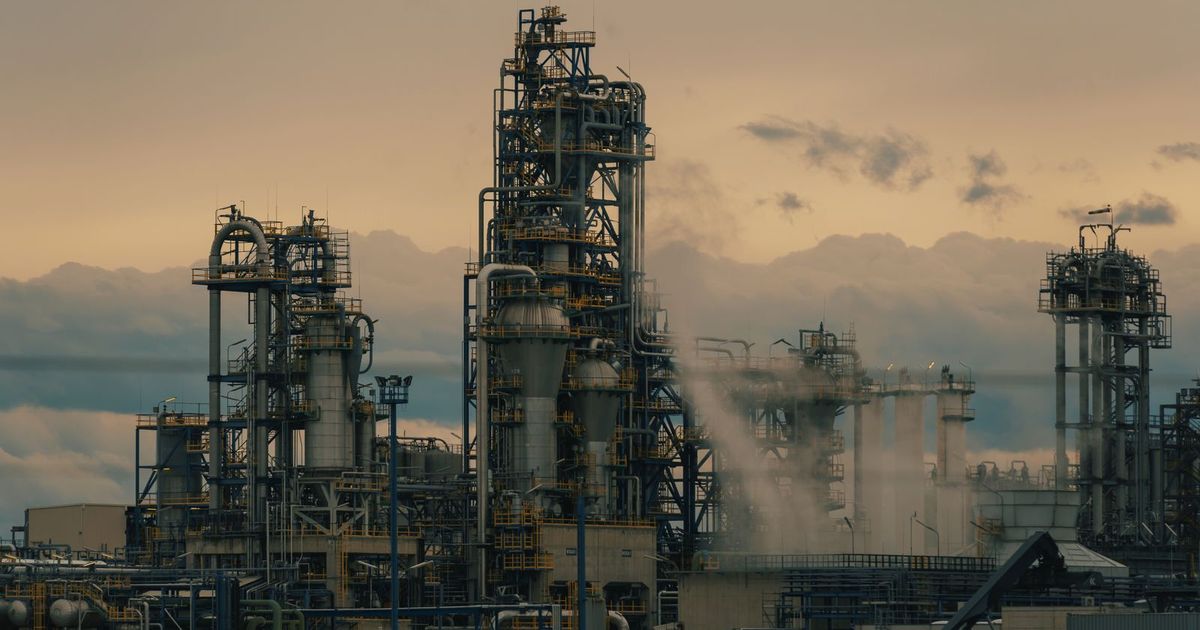
OPEC+ ministers meet online today, Sunday 29 November 2026, to settle how much oil the alliance will pump in 2027, with oil prices still far above pre-war levels and shipping in the Gulf under repeated attack. Saudi Arabia, Russia and 19 other members are on the call, which Rystad Energy analyst Jorge Leon described, according to AFP, as one of the most complicated meetings the group has held in years.
The decision matters well beyond the oil patch. Brent crude, the international benchmark that influences UK petrol, diesel and wholesale energy costs, settled at $95.44 a barrel for January delivery on Friday 27 November, according to market commentary published on 28 November. That is about 20% below the roughly $118 peak reached in late October, but still a long way above where it traded before the war involving Iran began.
The outcome was not known at the time of writing. Three Reuters sources, as relayed by a market report, said the group had agreed in principle to roll over first-quarter 2027 output targets unchanged. That is not an official decision, and the harder question of full-year 2027 quotas depends on a contested review of each member's production capacity.
For UK households, businesses and investors the question is whether oil stays in a range that lets inflation ease, or whether Gulf disruption keeps energy costs and market volatility elevated into the new year.
The 21-member group, which combines OPEC with allies such as Russia, normally keeps production in line with agreed quotas. A smaller group of seven core producers (Saudi Arabia, Russia, Iraq, Kuwait, Kazakhstan, Algeria and Oman) held its December targets steady at a meeting on 1 November, the third month in a row on hold, according to market reports at the time. The 1.65 million barrels a day of voluntary 2023 cuts were fully unwound in September, while about 2 million barrels a day of 2022 cuts remain in force until the end of 2026.
The key issue today is the capacity baseline. A US consultancy, DeGolyer and MacNaughton, spent about two years assessing what each member can actually produce, and those figures will anchor 2027 quotas. OPEC Secretary-General Haitham Al-Ghais said in mid-November that the assessments came from an independent and objective process.
Iraq does not accept its figure. Bloomberg reported that Baghdad was assessed at below 5 million barrels a day, while Iraq says it can produce 5.2 million. Oil Minister Bassem Khudair said on Friday that Iraq was negotiating with OPEC to raise its ceiling. Market commentary also says Kazakhstan wants a higher estimate.
The talks come against the backdrop of the US war with Iran, which has disrupted output in several key Gulf producers. Most Gulf producers have been pumping well below their quotas because shipping through the Strait of Hormuz, the narrow route for roughly a fifth of the world's crude, has been restricted. Kpler data cited in a 28 November report put Middle East crude exports at an average of 12.8 million barrels a day in the week to Wednesday, about 24% below the pre-war level of around 17 million.
Prices have nonetheless fallen sharply over November. Traders have been selling in expectation that exports will recover enough to produce the first surplus since the war began, and the International Energy Agency has forecast a supply surplus from the fourth quarter. Its November report said global supply rose 2.3 million barrels a day in October to 105.4 million. Brent for February delivery, the more actively traded month after January expires on 30 November, settled lower at $90.84 on Friday, a sign the market is pricing in easing prices.
Another factor is the UAE, which left OPEC earlier this year. AFP quoted PVM analyst Tamas Varga as saying the exit could push members with spare capacity to demand higher quotas or threaten to leave. Quota disputes were a main reason behind the UAE's departure, according to the same report.
Forecasters are split. Goldman Sachs expects a 2027 surplus of 2 million barrels a day with Brent averaging about $88, Kpler sees oversupply of about 3 million, and JPMorgan has pointed to Brent in the high $70s in the first half of 2027. Others are more cautious. UBS analyst Giovanni Staunovo has said the November sell-off has probably gone too far, and Rapidan Energy's Bob McNally expects $70 to $80 in calm periods but above $100 during escalation, doubting the surplus will materialise. Analyst Arne Lohmann Rasmussen of Global Risk Management said a large surplus could force production cuts in 2027.
The security picture is still fragile. Over the week, Houthis claimed an attack on Saudi Arabia's Ras Tanura refinery, and Iran's Revolutionary Guards said a container ship was targeted near Hormuz; one market report said it had found no confirmed loss of Saudi output or exports. Another report said a projectile struck Saudi Aramco's 400,000 barrel-a-day Jazan refinery on 26 November, killing a worker, and attributed it to the Houthis. These are details from secondary reports and should be treated as developing. Separately, President Trump told Fox News he might launch strikes on Iran after the new year, according to one report.
Oil is the common thread between the Gulf and UK household bills. Higher crude feeds through to petrol and diesel prices within weeks, and into freight and airline costs. Gas and electricity prices are driven mainly by gas markets, but energy-wide risk sentiment tends to move together. The Bank of England has already flagged the Middle East war as a risk to the inflation outlook, so a steadier oil price would help the case for easing price pressure, while a spike would complicate it.
For investors, FTSE 100 heavyweights in oil and gas are sensitive to the Brent price, while airlines, retailers and manufacturers tend to move the other way. Monday 30 November brings the first trading after the OPEC+ decision, and the expiry of the January Brent contract, which can add to short-term volatility. This is general information on how markets work, not a forecast.
Specific UK pump-price figures for this week were not checked for this article.
Sources: AFP via Kuwait Times (29 November 2026); FinanceFeeds (28 November 2026); The Boston Report (28 November 2026); HDFC Sky (28 November 2026); investingLive (1 November 2026). General information, not financial advice.
Photo: Pexels.
Members are setting production quotas for 2027, based on a new assessment of each country's capacity. A rollover of first-quarter 2027 targets was reportedly agreed in principle but is not official.
January Brent settled at $95.44 on Friday 27 November, with February Brent at $90.84. Brent's 52-week high is $126.41, set on 30 April 2026.
Iraq says it can produce 5.2 million barrels a day, while its assessed capacity is reported to be below 5 million. A higher capacity figure would justify a bigger quota.
Goldman Sachs, Kpler and JPMorgan expect a surplus that pushes prices lower, but UBS and Rapidan Energy are sceptical, and escalation in the Gulf could send prices back above $100.
Crude prices influence pump prices and transport costs fairly quickly, and feed into inflation. Household gas and electricity are tied more closely to gas markets.
Reports say the UAE left OPEC earlier this year, partly over quota disputes, and is no longer bound by the group's quotas.
Spain votes today in an early general election. Here is what polls showed, how markets may react on Monday and what UK investors should watch. No result yet.
From Emirati musicians and international performers to theatre that carries stories between cultures and towers that answer to their setting, Dubai's identity is taking shape in places few people think to look.
Spain holds a snap general election on 29 November. Most polls put the PP and Vox near a majority, while Pedro Sánchez says the Socialists can still win.
Ukraine says Operation Bear Trap has retaken 200 sq km while US-brokered talks float Donetsk and NATO-style guarantee proposals that Kyiv resists.
Top stories and analysis, straight to your email. No spam – unsubscribe any time.
By subscribing you agree to our Privacy Policy.