World
OPEC+ meets on 2027 oil quotas as Brent holds near $95
OPEC+ meets today to set 2027 oil quotas amid Gulf attacks and an Iraq capacity row. What it could mean for UK fuel costs, inflation and markets.
From Emirati musicians and international performers to theatre that carries stories between cultures and towers that answer to their setting, Dubai's identity is taking shape in places few people think to look.
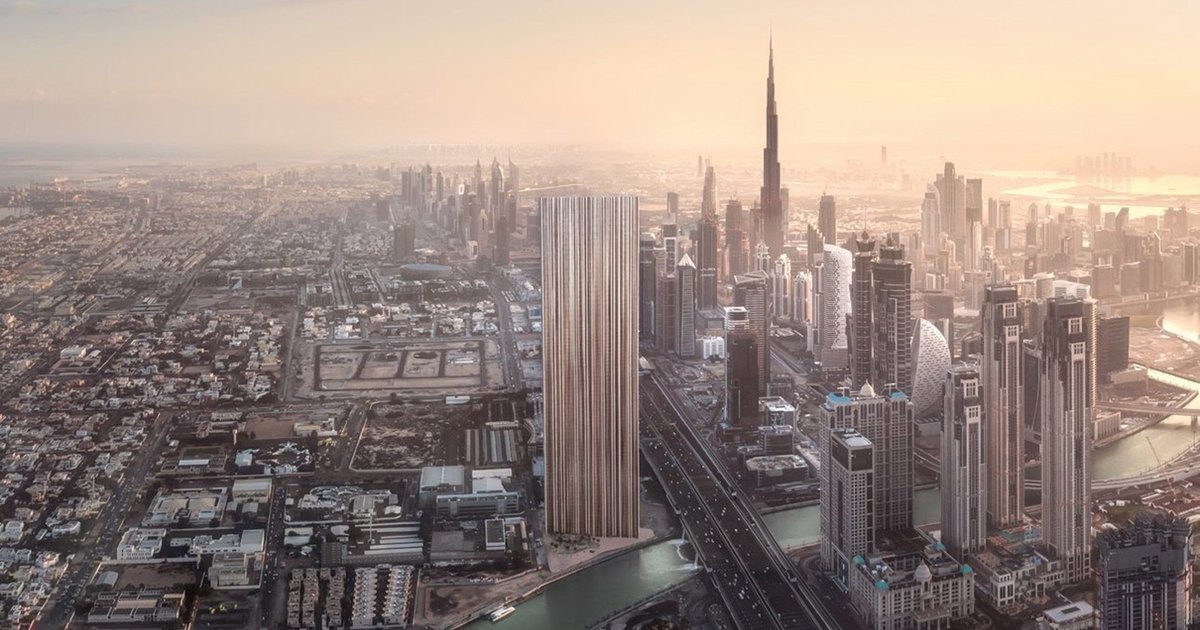
In February I sat in a theatre in Dubai and watched an Australian director, an international cast and an international audience work their way through a story from my own country. The production was Karn, drawn from the Mahabharata, and it is rooted in my own culture and heritage. I could hardly believe where I was.
This was Dubai, remember: the city many people still file under shopping malls, skyscrapers, luxury, botox and fillers, business, hustle, supercars and conspicuous wealth. I know that filing system well. I have worked inside it for about eight years.
And yet here was a theatrical interpretation of a story from my own culture, brought to life by people from different backgrounds, in a city often assumed to have little cultural depth. That contrast is where this piece begins. My suspicion, after years of living here, is that Dubai's cultural identity is developing in places and in ways that many people have not noticed.
In November I went to the 22nd edition of DIFC Art Nights, the festival held at Gate Village in the Dubai International Financial Centre, which this year showed more than 600 artworks. There I watched Mohamed Al Zarooni (@zzarooni) perform with Zarooni Sound Society, his live project. He is an Emirati musician and vocalist, born in London and based in Dubai. I was pleasantly surprised to see an Emirati cover Creep by Radiohead, in one of Dubai's wealthiest neighbourhoods: DIFC.
DIFC is where Dubai keeps its banks, law firms and global institutions. It is the part of town most people mean when they call the city transactional. An Emirati vocalist performing in the middle of it is a small piece of evidence that a commercial district can also be a stage, and that the two do not have to be separate worlds.
Zarooni is not alone. Fatima, who performs as Fafa (@fafa.music), is an Emirati musician and vocalist working in soul, R&B and jazz. Mihir Singh (@krantimusic_) is an Indian DJ working the city's rooms. Add the international performers who pass through Dubai every week and the picture that emerges is not one scene but several overlapping ones: Emirati voices, and performers from everywhere else, sharing the same stages.
I was in the audience for Karn on 15 February at Theatre by QE2, an hour-long staging conceived and headlined by Anita Nayyar and directed by Alex Broun (@alex.broun). Broun is an Australian playwright and director who has been producing work in Dubai since the early 2010s.
Consider the ingredients. An Australian director. An international cast. An international audience. A story from the Mahabharata, which belongs to Indian cultural heritage. All of it brought together in a city built, to a large extent, by people who came from somewhere else. Nobody was in that room because a strategy document said they should be. They were there because a story from one place found an audience from many.
For me it is one of the clearest examples of how Dubai's cultural identity is formed: not by one tradition setting the terms, but by different backgrounds meeting in the same room.
I work in real estate, so I know a tower is first of all an asset. Muraba Veil is a useful exception to bring into a conversation about culture, because it is a building whose architects have tried to say something.
It's a statement against Dubai's biggest criticism of glass towers after glass towers after glass towers.
The tower is designed by the Pritzker Prize-winning Spanish practice RCR Arquitectes for the developer Muraba. It will rise to about 380 metres and 73 storeys in Al Wasl, where the Dubai Water Canal meets Sheikh Zayed Road, and it is only 22.5 metres wide, with 131 residences. It is under construction, with completion expected in 2028.
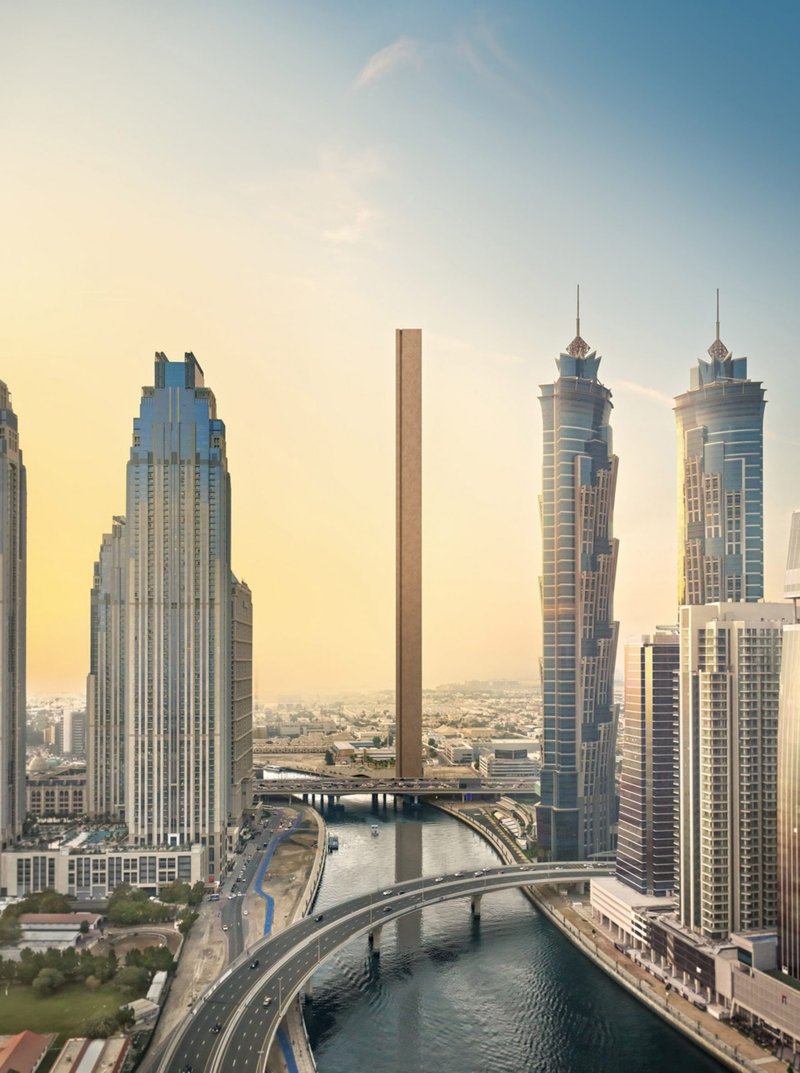
The starting point, in the project's own description, is the traditional Arabian house. That house was organised around a courtyard, a shaded central space that brought light and air indoors, kept the heat and the street at a distance, and gave the household somewhere to gather. The challenge is to translate that idea into a tower, where there is no ground to put a courtyard on.
Published descriptions of the project explain the approach. Residents pass through layers softened by shade and greenery before they reach the inner living space. Each residence has outdoor terraces on both sides. At the base, beneath a dune-like form, sits a spa with an oasis and an amphitheatre. Privacy, shade, light, greenery and a place to come together: the old courtyard's concerns, rearranged vertically.
The one material the project names publicly is stainless steel. It is used for the Veil, a porous mesh that wraps the tower and is inspired by the mashrabiya, the carved lattice screen of traditional Arabian homes, which let people look out without being seen. In the architects' renderings the tower reads as a warm, bronze-toned column, finely ribbed from top to bottom, rising out of a skyline of glass and pale stone. According to one published description, the mesh also reflects the shifting shades of the sky, so its colour changes with the weather and the hour. It is also described as adjustable by residents, letting them control how open it is as the light changes.
Set against a skyline of glass and sand-coloured stone, a reflective, semi-transparent skin does something unusual: it makes a very large building look slightly less sure of its own outline. Light passes through it; the sky is printed on it; and from inside, the mesh frames the view rather than blocking it.
The environmental case rests on a few specific decisions rather than on a label. The external mesh and deep balconies shield the residences from direct sun, which is the main source of heat in this climate. The residences are dual-aspect, which allows air to move through them and reduces the reliance on mechanical cooling. And because the site sits beside Sheikh Zayed Road, the design team, with the engineers at Arup, tested the materials used in the terrace soffits to reduce traffic noise, so that the terraces can be used rather than merely admired.
Each of these is a way of making a building respond to its setting. That is a design position, and it is the position the traditional courtyard house took long before anyone used the word sustainability.
Al Wasl is part of Jumeirah, and Jumeirah has an older story than its beach clubs suggest. The Jumeirah Archaeological Site, which lies between Jumeirah and Al Wasl Road, was discovered in 1969 and dates mainly to the Abbasid era, around the tenth century. It was a stopover on a trade route linking Iraq and Oman with India and China, and the excavations have uncovered houses, a market, a caravanserai and a mosque, along with pottery, coins and jewellery.
I don't mean to overstate any link, except the poetic beauty of that archaeological site being next door to it. What the two share is a neighbourhood, and a reminder that building in this part of Dubai has long been a question of climate, trade and hospitality.
A tower can be a record, an investment or a skyline gesture, and Dubai has built plenty of those. Muraba Veil argues for another possibility: that a building can express an idea, answer its surroundings and contribute to what a city feels like. It is a piece of art that embodies the region's traditional architecture while still having Blade Runner 2049-style futuristic elements.
Artists need audiences, and audiences need places to meet them. Dubai has been building those places for longer than its reputation suggests.
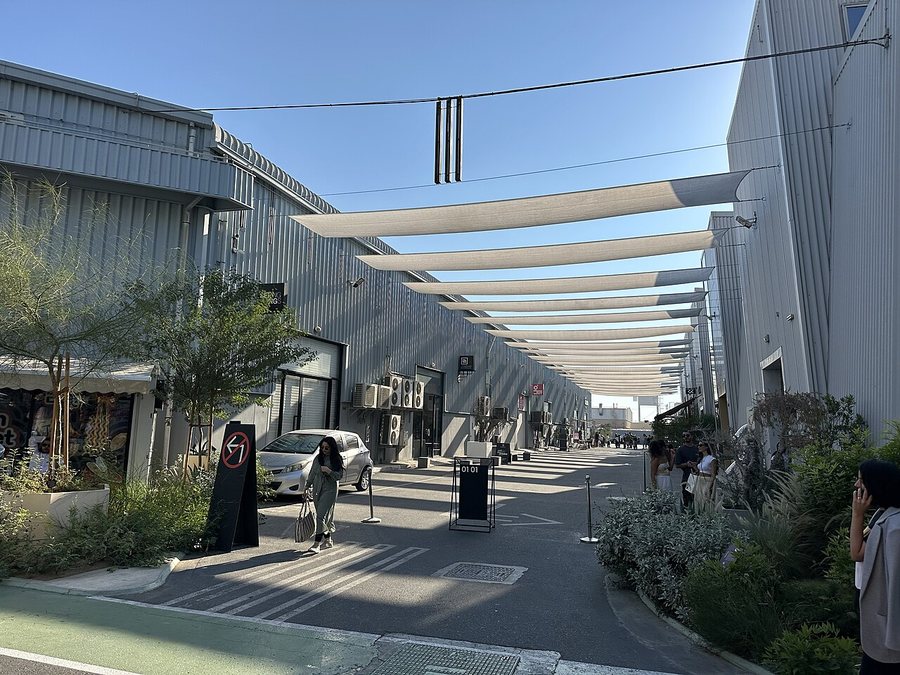
Alserkal Avenue, founded in 2007 in an industrial district, says it now houses more than 100 creative organisations. Jameel Arts Centre, which opened on 11 November 2018, gave contemporary art a permanent public home at Jaddaf Waterfront. Dubai Opera, which opened in 2016 and anchors the Opera District, put a 2,000-seat stage into the centre of the city. House of Arts at Expo City Dubai opened in November 2025 in the former Morocco Pavilion. Art Dubai staged a special 20th edition from 14 to 17 May 2026 and reported more than 25,000 public visitors.
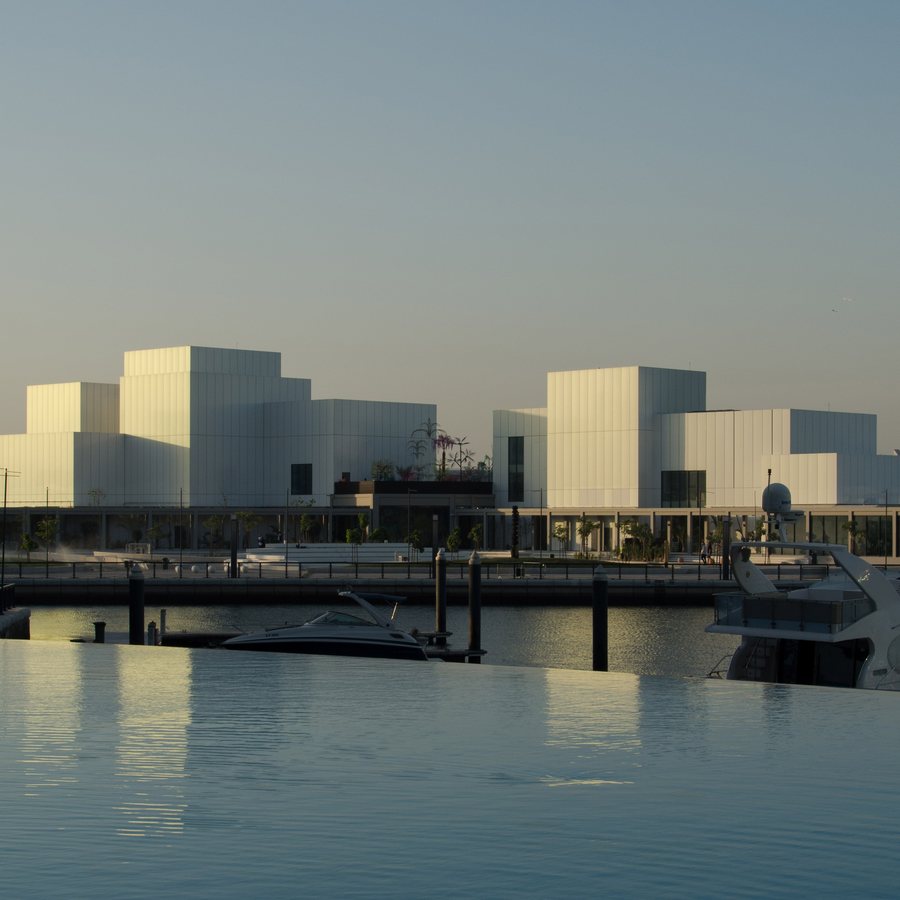
These places matter because they give artists somewhere to shine, which is a different thing from a desk: a platform to be seen, an audience that comes back, and a community that argues with them. A gallery needs collectors, a collective needs a street, and a musician needs a room where someone is listening. Together they make an ecosystem, and ecosystems grow when the people inside them can reach one another.
The government's part in this is real. Dubai's Executive Council, chaired by Sheikh Hamdan bin Mohammed, approved the Dubai Cultural Strategy 2033 on 1 July 2026. It sets out 40 initiatives and a target for the cultural sector to contribute 5.4 per cent of GDP. The emirate's Public Art Strategy has already produced commissions such as the one at Al Hudaiba public garden.
These are the foundations: land, buildings, funding and permission. What they cannot do is produce the audience that turns up on a Tuesday, or the band that plays a bad gig and returns the following week. And I've seen my fair share of these bands, returning week after week. The population of Dubai has been primed to receive these future rockstars, to experience local music, comedy and theatre popping up over the last few years. Edinburgh offers a useful comparison. The Fringe began in 1947 when eight theatre companies turned up uninvited at the official International Festival. The festival was the infrastructure. The Fringe was the people.
Abu Dhabi has taken a different route, building its cultural landscape as a single district on Saadiyat Island, and it adds a useful perspective to the story of the wider country.
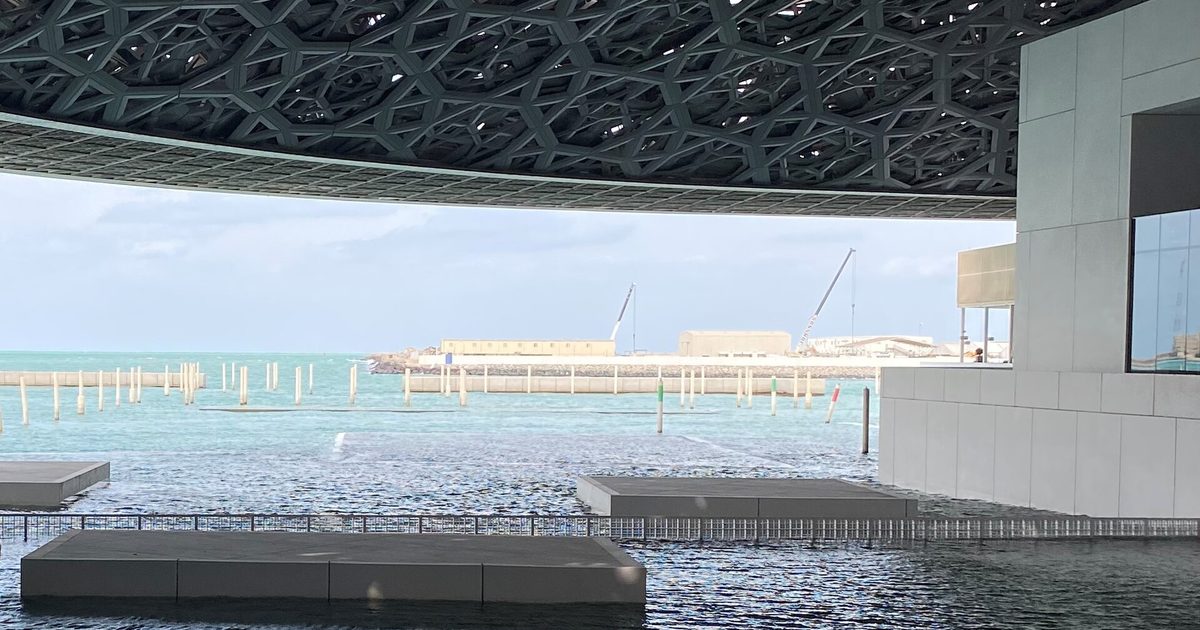
The Louvre Abu Dhabi opened in 2017. The Abrahamic Family House, with a mosque, a church and a synagogue on one site, followed in 2023, and the Zayed National Museum opened on 3 December 2025. On 11 December 2026, the Guggenheim Abu Dhabi opens its doors. Designed by Frank Gehry, it will show modern and contemporary art in 30 galleries, and it gives the district a collection devoted to the art of the last century.
Dar Al Funoon, another Gehry design, is set to open sometime in 2030. It is planned as a performing arts centre, with a hall of more than 2,000 seats and a large open-air amphitheatre. Between them, these institutions give Abu Dhabi a very different cultural personality from Dubai's, and a UAE that has both is richer for it.
As someone who once moved to Manchester, won the Frog & Bucket Comedy Competition, took in the Edinburgh Fringe and London's comedy and theatre scene, and has also performed as a comedian in Dubai, I see Dubai's soul emerging daily. I see it in bars, restaurants, cafés and streets, in recording studios and comedy rooms and, most of all, in its people.
Culture is not limited to museums, theatres, government strategies or impressive buildings. It is the musician playing a venue, the comedian working a small room, the audience meeting a story that is not theirs, the independent artist making something new, and the conversation at a café table that outlasts the coffee. It is also the people who chose to live here and brought something of their own with them.
Dubai does have a soul. You will not find it in one landmark or one institution. It is at the next table, and it has just decided to stay for the second act.
Sources: Dubai Media Office (Executive Council, 1 July 2026; House of Arts, 18 November 2025; Art Dubai, 19 May 2026); Abu Dhabi Media Office and Department of Culture and Tourism Abu Dhabi (Guggenheim Abu Dhabi, Dar Al Funoon, Zayed National Museum); Khaleej Times (DIFC Art Nights, November 2026; Zarooni, 13 October 2025); Arup, ArchDaily and Zawya (Muraba Veil); Dubai Culture and Arts Authority and The National (Jumeirah Archaeological Site); Edinburgh Festival Fringe Society; Alserkal; Art Jameel; Filmfare Middle East and Platinumlist (Karn).
Images supplied by the author team. Hero and Muraba Veil renderings: RCR Arquitectes and Muraba, via Dezeen. Jameel Arts Centre: via Dezeen. Alserkal Avenue: Fuzheado via Wikimedia Commons (CC0). Louvre Abu Dhabi: Boubloub via Wikimedia Commons (CC BY-SA 4.0).
A plan approved by Dubai's Executive Council on 1 July 2026, with 40 initiatives and a target for the cultural sector to contribute 5.4 per cent of GDP.
The Spanish practice RCR Arquitectes, for the developer Muraba. It is a roughly 380-metre residential tower in Al Wasl, Dubai, wrapped in a stainless-steel mesh inspired by the mashrabiya. It is under construction.
On 11 December 2026, according to the Department of Culture and Tourism Abu Dhabi.
It is set to open sometime in 2030.
OPEC+ meets today to set 2027 oil quotas amid Gulf attacks and an Iraq capacity row. What it could mean for UK fuel costs, inflation and markets.
Spain votes today in an early general election. Here is what polls showed, how markets may react on Monday and what UK investors should watch. No result yet.
Spain holds a snap general election on 29 November. Most polls put the PP and Vox near a majority, while Pedro Sánchez says the Socialists can still win.
Ukraine says Operation Bear Trap has retaken 200 sq km while US-brokered talks float Donetsk and NATO-style guarantee proposals that Kyiv resists.
Top stories and analysis, straight to your email. No spam – unsubscribe any time.
By subscribing you agree to our Privacy Policy.