World
Iran claims more tankers hit mines in Hormuz as Brent nears $95
Iran says two more tankers hit mines in Hormuz while Houthis target Saudi sites; Brent settled at $94.61. What it means for UK energy bills and inflation.
Iran says no talks until its conditions are met, while Washington sanctions shadow-banking networks and Qatar tries to revive diplomacy. What it means for oil and UK fuel.
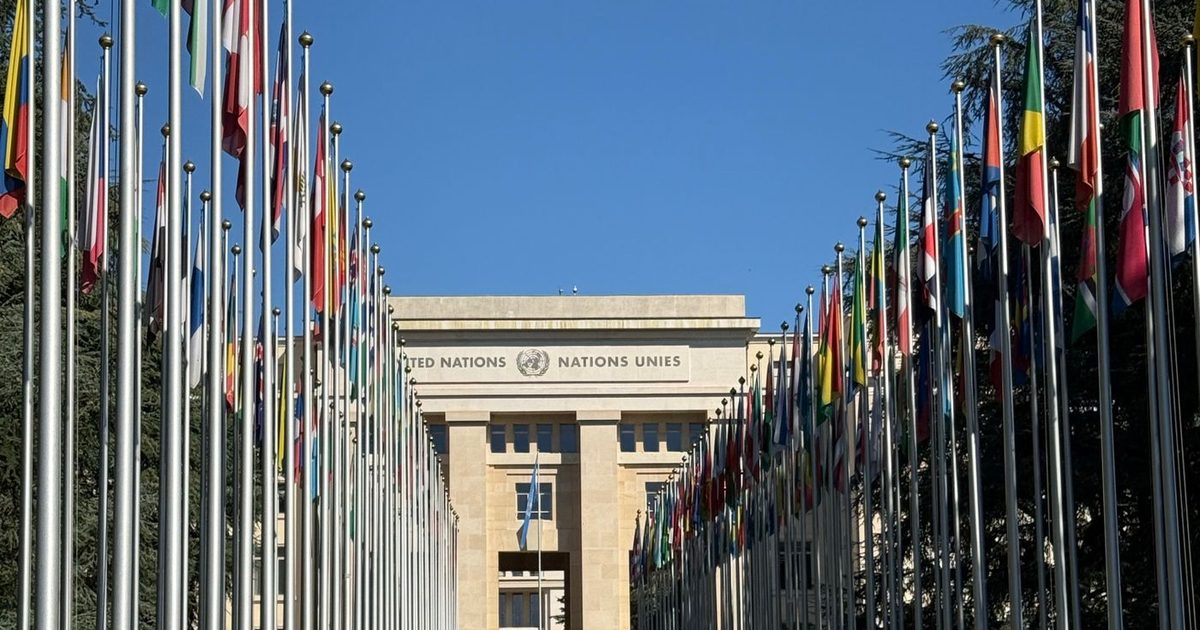
Iran's chief negotiator said on Tuesday 24 November 2026 that Tehran will take no steps and hold no talks with the United States on ending the war until a list of seven conditions is met, a day after Washington announced a new round of sanctions on Iranian shadow-banking networks and Qatar's prime minister met senior US officials in an effort to revive diplomacy.
Mohammad Bagher Ghalibaf, the parliament speaker who leads Iran's negotiating team, told lawmakers the position is unchangeable. Reports of his speech list five of the conditions: lifting the US naval blockade of Iranian ports, sanctions relief, release of frozen Iranian funds, an end to hostilities on all fronts, and a formal declaration that the war is over. The other two were not detailed in the reports reviewed.
The stand-off matters well beyond the Gulf. Iran's ability to restrict traffic through the Strait of Hormuz has kept oil prices elevated for months, feeding into UK fuel prices, the energy price cap and the Bank of England's inflation outlook. Brent crude slipped below $90 a barrel on Monday and Tuesday, a three-month low, before rebounding on reports of fresh attacks on shipping.
Speaking in parliament, Ghalibaf said Iran would respond decisively to hostile moves and could change the geography of the battlefield if its adversary made a mistake. He framed American threats and economic pressure as a sign of weakness, and reports say he was responding to recent remarks by President Trump and Treasury Secretary Scott Bessent. Foreign Ministry spokesman Esmail Baghaei separately called the US blockade a military aggression that Iran would not tolerate.
A day earlier, the US Treasury announced designations targeting what it called the shadow banking system that moves Iranian oil and petrochemical revenue. Its release named exchange houses inside Iran, front companies in Dubai, Turkey and Hong Kong, and entities that matched exporters and importers across tens of billions of dollars of annual trade. Bessent said Iran's economy is underwater and its leaders are panicking, and described the networks as the last financial lifeline of a bankrupt regime. The announcement followed an earlier phase of the same campaign launched in August.
One outlet reports that the Treasury action was accompanied by a figure of about $14.7 billion in possibly Iran-linked activity identified by the US financial crimes unit between January 2025 and August 2026. That number was not in the Treasury release reviewed, and it describes potentially linked activity rather than seized funds.
Qatar's prime minister and foreign minister, Sheikh Mohammed bin Abdulrahman Al Thani, held meetings in Washington on 23 November with Vance and Rubio, alongside a scheduled US-Qatar Strategic Dialogue. The State Department said Rubio appreciated Qatar's mediation efforts, while a Qatari spokesman said contacts with the parties continue and details remain confidential. AP reported that mediators have floated a trade-off in which Iran would ease disruption in Hormuz in return for limited sanctions relief, opening a route to wider talks including the nuclear programme.
The diplomacy is shadowed by the threat of renewed fighting. In a Fox News interview on 22 November Trump said he was inclined to resume strikes after the new year if there is no deal, and accused Iranian negotiators of only talking. AP reported, citing unnamed sources, that he told Vance the administration does not need a deal with Iran, though the White House has not publicly confirmed that account. One report citing Bloomberg says Britain and several Gulf states have privately urged Washington against striking, fearing Iranian retaliation and a prolonged energy shock; that claim is second-hand and unconfirmed.
Iran summoned Qatar's chargé d'affaires after a Qatari-German statement, according to one live report. AP noted that Iran had not responded directly to the Washington meetings.
Brent crude fell below $90 a barrel on Monday, down 3.5% to about $89.37, and touched about $88 on Tuesday morning, its lowest in about three months. It then rebounded and settled around $91 according to one market wrap after reports of projectiles hitting vessels near Hormuz. UKMTO, the UK maritime security agency, reported three ships struck on 23 November with all crews accounted for. Iran's Revolutionary Guards said mines damaged tankers, which independent bodies have not confirmed.
Analysts cite larger supplies and stockpile releases as reasons for the price falls. Deutsche Bank estimated a 1.7 million barrel a day global surplus in October, and UBS noted that releases from strategic reserves have offset reduced Middle East exports. One broker report said Goldman Sachs had raised its December Brent forecast to $105, which conflicts with spot prices and should be treated cautiously until verified.
Another reading from the Strait comes from tracking data. Different sources count transits very differently, from a couple a day to a few per day compared with around 80 or more before the war, and a monitoring site put the number of vessels waiting at about 400. Marine insurance and freight costs remain far above pre-war levels.
Cheaper crude has begun to reach the forecourt. The RAC said on 24 November that average petrol prices fell below 160p a litre for the first time since the end of July, down from a war-time peak of 174.94p on 5 October. Diesel averaged 191.3p, compared with a record 200.2p in October. RAC spokesman Simon Williams said further falls should follow if oil stays below $90, with petrol possibly dropping below 150p within a fortnight and diesel heading towards 185p.
Home energy bills are moving the other way because they depend on wholesale gas rather than crude. Ofgem's price cap for January to March 2027 is reported to be rising 26% to £2,166 for a typical household. Meanwhile UK inflation was 3.6% in October and the Bank of England, which raised rates to 4% on 5 November, faces a December decision on 17 December with markets pricing a high chance of another rise. Any resumption of strikes on Iran would risk reversing the recent fall in fuel prices.
For investors, energy-sensitive stocks, airlines, and sterling have all moved with Gulf headlines in recent weeks. This is not investment advice, but it shows why headlines about talks, sanctions or shipping attacks can have effects on UK prices and markets.
No date has been set for talks. Iran says conditions must come first, Washington says it wants a real deal, and Qatar is continuing to shuttle between the sides. Trump's new-year timeline is not a formal deadline, and the US blockade of Iranian ports remains in force.
Watch for further Treasury designations, any Iranian reaction to the Qatar meetings, new incidents near Hormuz, and OPEC and International Energy Agency updates on supply. Sources disagree on several details, including the number of tankers hit and the length of the blockade, so figures should be treated as provisional while the situation develops.
Sources: US Treasury press release (23 November 2026); Gulf News live blog (24 November 2026); The Tribune/ANI (24 November 2026); APA (24 November 2026); AP via ClickOnDetroit (24 November 2026); Anadolu Agency (22 November 2026); The Hill (23 November 2026); Reuters-style market wrap via Nation Thailand (24 November 2026); Business Motoring citing the RAC (24 November 2026); Il Sole 24 Ore English (24 November 2026). General information, not financial advice.
Photo: Pexels.
Ghalibaf said there are seven. Reports name five: lifting the US naval blockade, sanctions relief, release of frozen funds, an end to hostilities on all fronts, and a formal declaration that the war is over.
It sanctioned more than two dozen Iranian exchange houses, front companies and individuals in what it called Operation Economic Outcast, targeting networks that move Iranian oil and petrochemical revenue.
Qatar is mediating between Washington and Tehran. Its prime minister met Vance and Rubio on 23 November and says contacts continue.
Oil is priced globally, so shipping disruption in the Gulf and talks news move Brent crude, which then feeds into UK pump prices with a delay.
It traded between roughly $88 and $91 a barrel on 24 November after dipping to a three-month low, depending on the time of the quote.
President Trump said he is inclined to resume strikes after the new year if no deal is reached, but no date or decision has been announced.
Iran says two more tankers hit mines in Hormuz while Houthis target Saudi sites; Brent settled at $94.61. What it means for UK energy bills and inflation.
The US proposed Section 301 tariffs on 14 economies from 15% to 35% over excess capacity. Nothing is in force yet; the UK is not named. What happens next.
Putin says retaliation for Ukrainian strikes on Russian refineries is inevitable, as reports say refining capacity is down 45% and peace talks aim for January.
Reported Iranian strikes, tanker incidents and a hardened US stance, while Brent sits near $89. What it means for UK fuel.
Top stories and analysis, straight to your email. No spam – unsubscribe any time.
By subscribing you agree to our Privacy Policy.