Markets
FTSE 100 ends week up 3.4% at 10,698 as miners and banks rally
The FTSE 100 closed Friday 27 November at 10,698.81, up 0.84%, for its best week in about eight months as miners and banks led a broad rally.
Gold bounced to $3,653 but is set for a 6% November loss. Payrolls, the Fed and the Bank of England loom; dates and levels to watch.
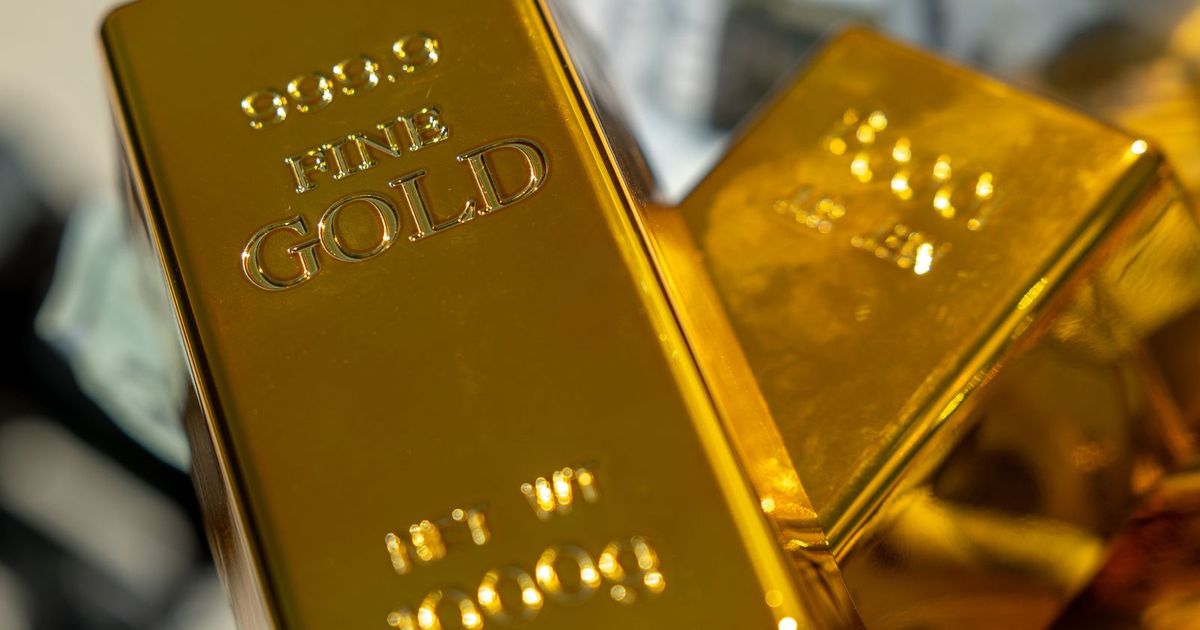
Gold ended last week at about $3,653 an ounce, a rebound of roughly 3% after a slide that took the metal to its lowest level since August 2025. Even so, it is on course for a loss of around 6% in November, with the month's final trading day still to come on Monday 30 November.
The week ahead is dense with events that could decide whether the bounce holds. A US jobs report on Friday 4 December, factory and services surveys on both sides of the Atlantic and an OPEC+ meeting on oil output all land before the US Federal Reserve meets on 8-9 December. For UK investors, the Bank of England's own decision follows on 17 December.
Sterling closed the week at about $1.3124, up 0.2%, while the US dollar index rose for a fifth straight week. Markets are treating a Fed rate rise next month as all but certain, which matters for gold because it pays no interest and becomes less attractive when returns on cash and bonds climb.
The metal had a violent few weeks. One analysis noted that gold dropped 24.6% over the 60 days to 23 November, the sharpest such fall since 1982. On Wednesday 25 November spot gold touched about $3,446. It then recovered, with Thursday's close around $3,567.60 and a jump of roughly 2.4% on Friday to about $3,653.
Kitco reported that trading was thin after the US Thanksgiving holiday, with US stock markets closing at 1pm New York time. A tech-led equity rally lifted risk appetite: the S&P 500 gained 1.6% on Friday and had its best week since April 2025. Analysts also pointed to renewed physical buying in China and a fading of forced selling, when investors sell liquid assets such as gold to raise cash during a share sell-off.
Silver rose even more sharply, up about 5.3% on Friday to around $43.62 an ounce. Kitco said defensive demand linked to the unresolved US-Iran situation and disruption around the Strait of Hormuz played a part, though it judged Friday's move to be driven mainly by financial sentiment.
Hotter US inflation data has changed the debate from cuts to hikes. October's PCE price index, the Fed's preferred gauge, rose 0.3% on the month and 3.8% over the year, with the core measure at 3.3%. Third-quarter US growth was revised up to an annualised 4.3%, and weekly jobless claims fell to 189,000. The two-year Treasury yield was about 4.7% and the ten-year about 4.9%.
That backdrop supported the dollar. The dollar index touched about 104.5 on 23 November, its highest since March 2025, before easing back. For sterling it means the pound has been held in a fairly tight range around $1.30-$1.31. One technical note published on 26 November put recent support near 1.3043 and the recent low near 1.3012, with resistance around 1.3136; these are analysts' reference levels, not forecasts.
Times below are those given by the cited sources and are subject to change.
The Fed enters its quiet period before the 8-9 December meeting, so there should be no scheduled public comments from policymakers. A strong jobs number would reinforce expectations of further hikes beyond December, which analysts say would pressure gold; a weak one would support the idea that December is the last increase.
The Bank of England raised Bank Rate by 0.25 percentage points to 4% on 5 November, in an 8-1 vote, with one member preferring a 0.5-point rise. UK consumer price inflation was 3.6% in October, a little below the 3.7% expected, with core inflation at 2.8% and services inflation at 3.7%. The Bank has projected inflation of about 5% by the second quarter of 2027, largely because of energy costs tied to the Middle East conflict.
Opinion is split on December. One analysis published on 27 November said markets priced roughly an 80% chance of a hike on 17 December as of 18 November, while a Reuters poll cited in the same piece found 64 of 65 economists expecting a hold in December and a rise in February 2027. S&P Global's chief business economist, by contrast, said after the November flash PMIs that a December hike looked close to certain. That disagreement is a reason to treat any single forecast with caution.
The flash UK composite PMI fell to 52.3 in November from expectations of 53.1, with services at 52.0 and manufacturing at 52.7, its strongest factory output growth since August 2024, helped by AI data-centre investment and defence spending. Employment fell again. Key UK data comes after this week: labour market figures on 15 December, November CPI on 16 December and the rate decision on 17 December.
For UK holders of gold funds or gold-linked investments, returns depend on both the dollar gold price and the pound's exchange rate; a weaker pound can lift the sterling value of dollar-priced gold, and a stronger pound can reduce it. Anyone with exposure should expect sharp daily swings around the 4 December payrolls release.
For borrowers and savers, the hike debate matters because higher expected Bank Rate feeds into fixed mortgage pricing and savings rates. Nothing in this week's calendar changes Bank Rate directly, but the euro-area inflation figure and US data will influence expectations that filter into UK borrowing costs.
Gold's recent range gives analysts reference points: StoneX analyst James Stanley, quoted by Mitrade, saw a base case of roughly $3,606-$3,690 through month-end, while one summary named about $3,567 as a downside marker and $3,742 as an upside one. These are scenario levels rather than predictions. The next big checkpoints are the 4 December payrolls, the Fed on 8-9 December, the ECB on 17 December and the Bank of England the same day.
Sources: Kitco PM Report (27 November 2026); FinanceFeeds, Gold Price Today week-ahead (29 November 2026); 1Trader, Weekly Forex Recap 23-27 Nov 2026 (27 November 2026); RoboForex, Bank of England rate hike analysis (27 November 2026); InvestingLive, UK November flash PMI (23 November 2026). General information, not financial advice.
Photo: Pexels.
Spot gold was about $3,653 an ounce late on Friday 27 November, up roughly 3% on the week but about 6% lower for November.
The Federal Reserve meets on 8-9 December. Futures priced a 99.4% chance of a quarter-point rise as of 27 November.
The Monetary Policy Committee announces its decision on 17 December, after labour market data on 15 December and November CPI on 16 December.
Gold pays no interest, so higher rates on cash and bonds make it relatively less attractive, which tends to weigh on its price.
Many analysts highlight US non-farm payrolls on Friday 4 December, forecast at about 90,000 jobs, because it shapes expectations for the Fed.
GBP/USD closed the week at about 1.3124, up 0.2%, according to a weekly forex recap.
The FTSE 100 closed Friday 27 November at 10,698.81, up 0.84%, for its best week in about eight months as miners and banks led a broad rally.
FTSE 100 closed up 1.75% at 10,609.30 on 26 November as Imperial Brands bid talk, Babcock and a miners and banks rebound lifted London.
The FTSE 100 closed down 0.4% at 10,426.94 as a US tech sell-off, hot PCE inflation and tariff plans hit sentiment; Europe set to rebound Thursday.
The FTSE 100 closed 0.1% lower on 24 November as miners fell sharply, Wall Street retreated and traders waited for US PCE inflation data.
Top stories and analysis, straight to your email. No spam – unsubscribe any time.
By subscribing you agree to our Privacy Policy.