Markets
FTSE 100 jumps 1.75% to 10,609 as Imperial bid, miners and banks rally
FTSE 100 closed up 1.75% at 10,609.30 on 26 November as Imperial Brands bid talk, Babcock and a miners and banks rebound lifted London.
The FTSE 100 closed Friday 27 November at 10,698.81, up 0.84%, for its best week in about eight months as miners and banks led a broad rally.
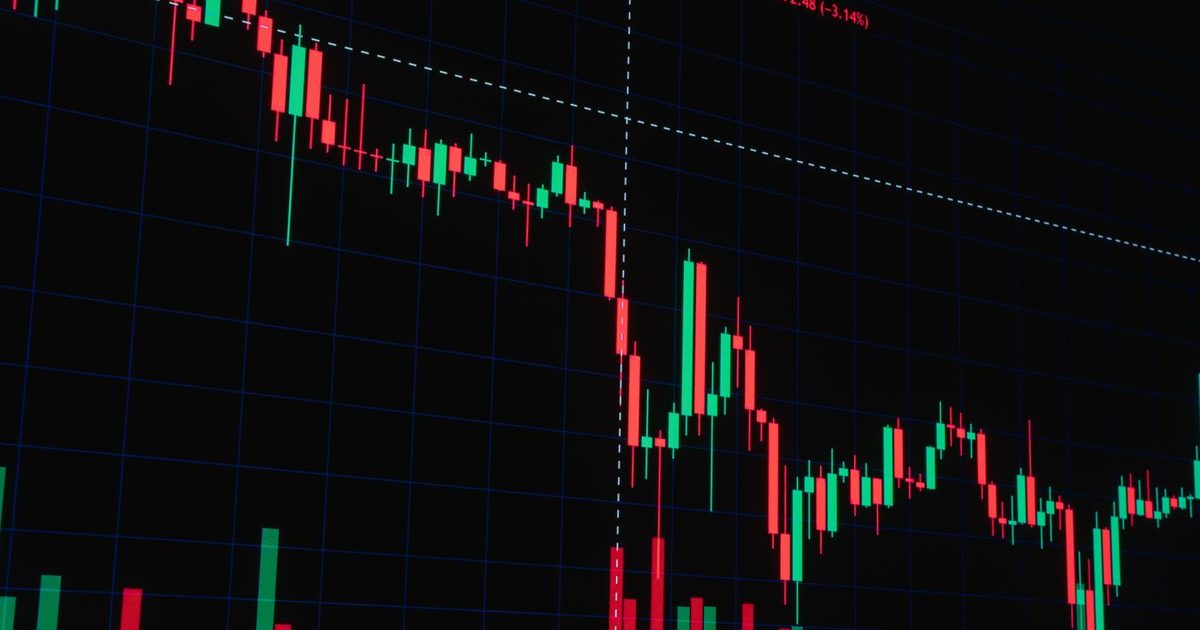
The FTSE 100 finished Friday 27 November 2026 at 10,698.81, up 89.51 points, or 0.84%, from Thursday's close of 10,609.30, according to a Dow Jones Newswires market report published that evening. The gain capped the London blue-chip index's strongest week in about eight months, with miners and banks doing most of the lifting.
On that closing figure the index rose 3.41% over the five sessions. Reuters, writing during the trading day, put the weekly advance at roughly 3.2% on the then-current level and called it the biggest weekly gain in around eight months. The mid-cap FTSE 250 was also on course for its best week in nearly four months, trading about 0.9% higher in the morning.
The rally came in two steps. Thursday 26 November delivered a 182.36-point (about 1.75%) jump as takeover news and a defence contract lit up the index, and Friday added to it as metals prices rebounded and the Bank of England's plan to ease capital rules for the biggest UK-focused lenders fed through to bank shares. It is worth keeping the context in view: the same index had its worst week for months only a week earlier, so part of this week's strength is a bounce from a low base.
This report covers the Friday close, what drove it, and what investors are watching next week. It is general information, not financial advice.
The index opened firmly higher, trading near 10,681 in the first minutes of the session, and held gains of roughly 0.7% to 0.8% through the morning before closing at 10,698.81. London Market Digest data cited in the close report showed advancing shares outnumbering decliners by about 2.7 to 1, a sign of broad participation rather than a rally confined to a few heavyweights.
The biggest gainers were commodity producers. Antofagasta rose about 4.9%, Glencore about 4.4%, and Fresnillo and Anglo American each about 4.1%. In the morning Fresnillo had been up as much as 6%. Among banks, Standard Chartered finished roughly 3.8% higher; earlier in the day Barclays had been up about 2.3% and HSBC about 1.8%.
On the downside, Kingfisher fell about 1.8%, Marks & Spencer 1.7%, Associated British Foods 1.5%, Coca-Cola HBC 1.4% and JD Sports 1.3%. Unilever and Diageo each lost around 1%. None of the reports gave a single reason for the consumer-sector weakness, and a rotation out of defensive stocks into cyclical ones is one plausible reading of the pattern rather than a confirmed cause.
Metals did the heavy lifting. Copper had its largest one-day gain since January, helping industrial-metal miners add about 4%. Precious-metal miners rose 5.2% after gold rebounded, recovering part of a fall of nearly 14% in that group the previous week. Gold stood at about $3,570 an ounce at Thursday's close according to Alliance News, up from about $3,453 a day earlier, and was reported back above $3,600 at midday on Friday.
For banks, the catalyst was the Bank of England. It said on Thursday that it plans to lower capital requirements for the largest UK-focused banks, after a review found that those lenders were disproportionately affected by the existing rules. The reports did not give the new ratios or the timetable, so the size of any benefit to profits or shareholder returns remains to be seen. Lower capital requirements can, in principle, free up room for lending or distributions, though regulators attach conditions.
Investor sentiment was also helped by relief on trade. Earlier in the week the US announced a new round of tariffs on goods from 14 major trading partners including China, Japan and the EU. Patrick Armstrong, chief investment officer at Plurimi Wealth, told Reuters that avoiding fresh tariffs was relatively good news for London-listed companies and that investors were reassessing overly pessimistic views on growth and AI-related spending.
US markets were closed on Thursday for Thanksgiving and reopened for a shortened session on Friday. At the London close, the Dow Jones was up about 1.0%, the S&P 500 about 1.1% and the Nasdaq about 1.5%. On Wednesday, before the holiday, the Dow had gained 0.3% while the S&P 500 slipped 0.3% and the Nasdaq fell 0.6%.
Europe was firm too. In early trading on Friday all nine major European indices tracked by The Edge were higher, with the German DAX up about 0.9% and the French CAC 40 up about 0.3%. On Thursday, the DAX had closed 2.1% higher and the CAC 40 1.7% higher. In Asia on Friday, Japan's Nikkei 225 rose about 2.1%, Hong Kong's Hang Seng about 2.1%, South Korea's Kospi about 4.3% and Shanghai about 3.7%, according to Marketcalls.
Oil remained elevated. Brent crude closed Thursday at about $96.38 a barrel, up from $93.09, and traded close to $97 early on Friday according to Proactive Investors, though other pages quoted a lower Friday level, so the precise Friday settlement is not confirmed here. Sterling was little changed: Alliance News put it at $1.3113 and €1.1949 at Thursday's London close.
Central-bank news ran in the background. Minutes of the European Central Bank's October meeting showed that a large number of policymakers could have backed a rate rise before the council voted to hold, and Spain's Pablo Hernández de Cos is reported to be set to succeed Christine Lagarde as ECB president. In the UK, Bank of England Governor Andrew Bailey told MPs on Wednesday that inflation, currently 3.6%, might peak lower than feared if energy prices stay where they are, although markets still price a rate rise at the December meeting, according to Mortgage Introducer.
UK vehicle output was one of the few domestic data points: the SMMT reported that production rose 4.8% in October, with car output up 6.2%.
Monday 30 November brings the Bank of England's Money and Credit and effective interest-rate statistics for October at 09:30 GMT, which will show how mortgage and savings rates and household borrowing moved. The Bank's next rate decision is on 17 December. Investors will also follow the UK's takeover and corporate-news flow after Thursday's jump in Imperial Brands, where Altria has said it is considering a possible cash offer, and Spain's general election on Sunday, which could move European sentiment.
Sources: Dow Jones Newswires via ad-hoc-news (27 November 2026); Reuters via Global Banking & Finance and Euronext Live (27 November 2026); Proactive Investors via Yahoo Finance UK (27 November 2026); Alliance News via AJ Bell (26 November 2026); The Edge Kuwait (27 November 2026); Marketcalls (27 November 2026); Mortgage Introducer (25 November 2026). General information, not financial advice.
Photo: Pexels.
It closed at 10,698.81, up 89.51 points or 0.84% on Thursday's close of 10,609.30, according to a Dow Jones Newswires report.
About 3.4% on the closing figure. Reuters, writing earlier in the day, described it as the biggest weekly gain in around eight months.
Copper posted its biggest one-day gain since January and gold rebounded, lifting industrial and precious-metal miners by around 4% and 5.2% respectively.
The Bank of England said on Thursday it plans to cut capital requirements for the largest UK-focused banks, which investors saw as supportive for lenders.
The Bank of England publishes October Money and Credit figures on Monday 30 November at 09:30 GMT, and its next rate decision is on 17 December.
No. This is general market information and not a recommendation to buy or sell any investment.
FTSE 100 closed up 1.75% at 10,609.30 on 26 November as Imperial Brands bid talk, Babcock and a miners and banks rebound lifted London.
The FTSE 100 closed down 0.4% at 10,426.94 as a US tech sell-off, hot PCE inflation and tariff plans hit sentiment; Europe set to rebound Thursday.
The FTSE 100 closed 0.1% lower on 24 November as miners fell sharply, Wall Street retreated and traders waited for US PCE inflation data.
FTSE 100 closed up 1.3% at 10,480.82 on 23 November as tech shares rebounded. What moved, and what to watch this week.
Top stories and analysis, straight to your email. No spam – unsubscribe any time.
By subscribing you agree to our Privacy Policy.