Economy
UK growth forecast lifted to 1.5% but inflation outlook worsens
Treasury's November survey of 19 forecasters lifts 2026 growth to 1.5% but sees inflation at 3.7% and Bank Rate at 4.0%, as the OBR stays more cautious.
CBI survey shows retail sales balance jumping to +9 in November, but economists see no lasting recovery yet as December sales are expected to be flat.
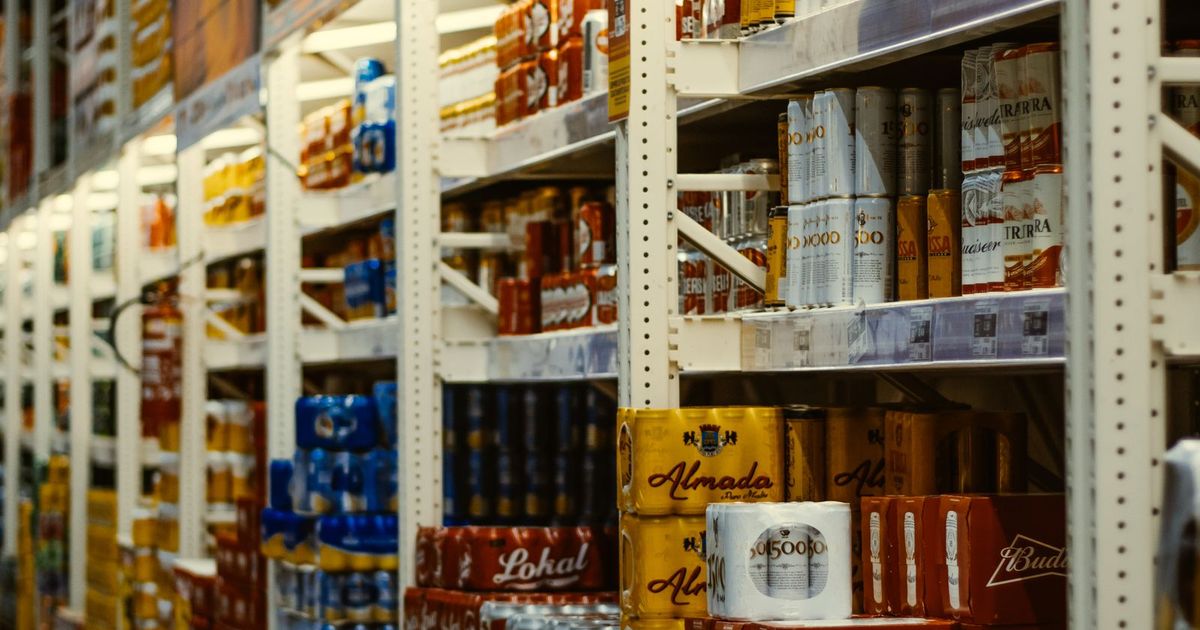
British retailers reported their strongest month for sales in almost four years in November, according to the Confederation of British Industry (CBI). Its monthly distributive trades survey showed the retail sales balance jumping to +9 from -10 in October, the best reading since late 2022 and the first positive one since September 2024.
The result, first published on 24 November and widely syndicated since, including by Reuters on 29 November, arrives just after Black Friday week and as retailers head into the most important trading weeks of the year. It was far better than economists had expected: the consensus forecast, according to Trading Economics, was a balance of -12.
The CBI itself urged caution. Its lead economist, Martin Sartorius, welcomed the return of sales growth and the first rise in retail staffing in more than four years, but said there were few signs yet of a lasting recovery. Retailers expect sales to be broadly flat in December, and they plan to keep trimming investment over the next year.
The survey sits alongside other, more mixed, signals on the health of the British consumer, including official retail data for October and the latest GfK consumer confidence reading. Together they paint a picture of households that are still anxious about their finances but, for now, willing to spend on bigger-ticket items.
The CBI survey asks retailers whether sales volumes are higher or lower than a year earlier and reports the difference between the share saying higher and the share saying lower. A reading above zero therefore means more firms are seeing growth than decline. At +9, November is the first time since September 2024 that the survey has tipped positive. The survey drew on 58 retail chains, with responses collected between 27 October and 13 November.
The expected-sales balance for December rose to +1, which is a softer reading than November but still positive. Selling prices continued to rise, though at the slowest pace since May 2024, which suggests retailers have less room, or less appetite, to pass on cost increases. Business confidence among retailers recovered to -11 from -29, its best level since August 2025.
It is worth remembering that the CBI survey is a sentiment-based balance rather than a measure of money spent, and it can swing sharply from month to month. A single positive reading after a long run of negative ones is encouraging, but economists tend to wait for confirmation in the following months and in official data.
The Office for National Statistics (ONS) published retail sales for October on 20 November. Volumes rose 0.7% on the month, following a revised 0.6% fall in September, and were 2.3% higher than October 2025. Over the three months to October, volumes were up 0.4% on the previous three months and 1.7% on the same period a year earlier.
The ONS said food stores benefited from higher sales of long-life items such as tinned goods and UHT milk, linked to a government campaign launched on 22 October. Non-food stores rose 1.1% overall, helped by clothing. Fuel volumes fell back as pump prices rose for a third month in a row. Online spending values rose 1.5% in the month and were 9.7% higher than a year earlier, lifting the online share of sales slightly to 29.2%.
The Reuters report said the October rise was partly driven by that government appeal, which suggests some of the strength may prove temporary.
The GfK consumer confidence barometer, released on 20 November, rose two points to -22 after a sharp fall in October. Its Major Purchase Index, which measures willingness to make big purchases, climbed five points to -17, the largest gain of the five measures. GfK's Neil Bellamy said this suggested there are still people willing to spend ahead of Black Friday and Christmas. However, confidence in personal finances over the next 12 months fell two points to -5, and he linked continuing weakness to persistent inflation and higher interest rates squeezing household budgets. He described confidence as fragile.
Retailers have had a difficult run. Before November, the CBI balance had been negative every month since September 2024, and the sector has been dealing with higher operating costs and cautious shoppers. The November rebound follows a particularly weak October in the CBI survey, which means part of the improvement may reflect a bounce from a low base.
Wider conditions remain challenging. GfK points to persistent inflation and higher interest rates squeezing household budgets. Those pressures help explain why GfK's measure of household finances remains weak even as spending on larger purchases picked up.
For shoppers, strong demand in November does not necessarily mean fewer bargains: the CBI said selling-price growth was the slowest since May 2024, and retailers are likely to stay competitive in the run-up to Christmas. Households should still be wary of discounts that appear too good to be true, and compare prices before buying.
For investors and businesses, the data is a modest positive for the retail sector, but not a turning point on its own. Flat expected sales in December and planned investment cuts suggest firms remain cautious. Staffing was the brighter spot: the CBI noted the first rise in retail employment in over four years.
The next ONS retail sales release, covering November and the Black Friday period, is due on 18 December 2026, alongside the final scheduled GfK consumer confidence reading of the year. Those releases will show whether November's improvement was a genuine shift or a short-lived lift from promotions and the October stock-up. The CBI's December survey will indicate whether retailers' flat forecast for the festive month holds.
Sources: Reuters via Cyprus Mail (29 November 2026); Trading Economics, CBI Distributive Trades (24 November 2026); Office for National Statistics, Retail sales October 2026 (20 November 2026); GfK/NIQ Consumer Confidence Barometer (20 November 2026). General information, not financial advice.
Photo: Pexels.
It is the percentage of retailers reporting higher sales volumes than a year earlier minus the percentage reporting lower. A positive figure means more firms report growth than decline.
At +9 it was the highest since December 2022 and the first positive reading since September 2024. Economists had expected -12.
Not necessarily. The CBI said there were few signs of a lasting recovery, expects flat sales in December, and retailers plan to cut investment over the next year.
The ONS reported retail volumes up 0.7% on the month and 2.3% on a year earlier, helped by long-life food purchases and clothing.
GfK's index rose two points to -22 in November. Confidence in the broader economy improved, but views on personal finances continued to weaken.
The ONS publishes November retail sales on 18 December 2026, the same day as GfK's final consumer confidence reading of the year.
Treasury's November survey of 19 forecasters lifts 2026 growth to 1.5% but sees inflation at 3.7% and Bank Rate at 4.0%, as the OBR stays more cautious.
The Bank of England says the UK financial system is resilient but warns AI debt, energy prices and gilt yields could combine into a bigger shock.
Bank of England Governor Andrew Bailey told MPs the inflation peak would be lower if energy prices hold, but more rate rises are likely if they do not.
Markets see an 83% chance of a December rate rise after Megan Greene said the Bank is behind the curve and the CBI reported the best retail month since 2022.
Top stories and analysis, straight to your email. No spam – unsubscribe any time.
By subscribing you agree to our Privacy Policy.